GH
Gene Heskett
Tue, Jul 6, 2021 2:23 AM
On Monday 05 July 2021 21:03:31 Ray West wrote:
On 05/07/2021 22:35, Gene Heskett wrote:
On Monday 05 July 2021 15:53:49 nop head wrote:
A 5ft heated pipe seems far less convenient and energy inefficient
than an insulated box that encloses the spool and warms it. Whether
it would work depends on how quickly the filament dries in hot air,
which I don't know.
At 5 or 6 feet, and the rate of fiber travel thru it, over an hour,
I'd think it should make a noticeable difference. Certainly worth
the price of the poly pipe and fittings to hook up a spare hair
driver to it. not as energy efficient as the hot box, but a couple
days quicker to build. Turn it on when the printer is turned on, and
it ought to have drier filament at the printer about the time cura
has everything warmed up as its a minimum of 6 minutes just for that
since it rereads the bed level error before every print at 25
locations on the bed, about 5 minutes right there..
Right now its sitting on a table/hutch combo, with the computer on a
2x2 ft piece of ply on saw horses, and a tall chest of drawers about
a hundred years old is about 5 or 6 feet away. And with a box to
hold the spool getting the warm air from that end of the pipe, it
ought to wind up drying the whole spool eventually.
If you've got the hair dryer, and a length of 2 inch diameter plastic
pipe, or similar, then it would be worth a try. Probably best to try
and get the filament more or less in centre of pipe a few bent wire
pig tails could do that. The reason why a day or two is needed for
drying a spool is because of the spool sides (usually) and the number
of layers required to get through to the centre of the spool. You can
possibly hear the difference, damp filament 'pops' in the extruder, as
the moisture turns to steam, and you get a rough surface. You'll have
to unload the filament from hot end, or waste the first few feet, if
not dried. A low cost/effort alternative would be to unspool a bit
more filament than needed, and set your bed temp to 50deg, and leave
the loose filament coiled on there for an hour or two.
I've considered a microwave but with a separate transformer for the tubes
heater, set for about 90% of its normal voltage and left on full time so
the heater wasn't being stressed with the power cycling most microwaves
do for heating control. And then switching the high voltage 2 secs on,
20 off. Microwaves are specific for heating water which is best done at
2450 MHz. At a 10% duty cycle, with no warm up delay that would bake the
water out to truly bone dry in a couple hours. And as the water left,
the heating wouldn't be so effective and a normal temp sensor, working
while the microwave is in the off cycle, could easily detect the drop in
temp as the water was baked out. Cheaper than $100 700 watt microwaves
could be modified by someone like me to make a really good filament
dryer. It could also serve to recycle the desiccant bags as the on time
could be reduced until its too short to start a fire in a really damp
bag of that stuff.
OTOH, amazon has a one spool dryer for $45, so I just bought two as I
expect to have a BIQU BX to join this one by Wednesday evening. And
since I finally got a perfect fit of the loose spline about an hour ago,
I dropped 5 gags of desiccant in a spool box, along with this spool of
petg, and its all sitting on a 55C build plate the rest of the night.
We'll see how it works sometime tommorrow when I go to remake the 2
inward facing splines this loose one will run inside of.
Progress, sometimes too slow to brag about it but I'm not a very good
waiter either. :o)
Thanks for reading this far.
Cheers, Gene Heskett
"There are four boxes to be used in defense of liberty:
soap, ballot, jury, and ammo. Please use in that order."
-Ed Howdershelt (Author)
If we desire respect for the law, we must first make the law respectable.
On Monday 05 July 2021 21:03:31 Ray West wrote:
> On 05/07/2021 22:35, Gene Heskett wrote:
> > On Monday 05 July 2021 15:53:49 nop head wrote:
> >> A 5ft heated pipe seems far less convenient and energy inefficient
> >> than an insulated box that encloses the spool and warms it. Whether
> >> it would work depends on how quickly the filament dries in hot air,
> >> which I don't know.
> >
> > At 5 or 6 feet, and the rate of fiber travel thru it, over an hour,
> > I'd think it should make a noticeable difference. Certainly worth
> > the price of the poly pipe and fittings to hook up a spare hair
> > driver to it. not as energy efficient as the hot box, but a couple
> > days quicker to build. Turn it on when the printer is turned on, and
> > it ought to have drier filament at the printer about the time cura
> > has everything warmed up as its a minimum of 6 minutes just for that
> > since it rereads the bed level error before every print at 25
> > locations on the bed, about 5 minutes right there..
> >
> > Right now its sitting on a table/hutch combo, with the computer on a
> > 2x2 ft piece of ply on saw horses, and a tall chest of drawers about
> > a hundred years old is about 5 or 6 feet away. And with a box to
> > hold the spool getting the warm air from that end of the pipe, it
> > ought to wind up drying the whole spool eventually.
>
> If you've got the hair dryer, and a length of 2 inch diameter plastic
> pipe, or similar, then it would be worth a try. Probably best to try
> and get the filament more or less in centre of pipe a few bent wire
> pig tails could do that. The reason why a day or two is needed for
> drying a spool is because of the spool sides (usually) and the number
> of layers required to get through to the centre of the spool. You can
> possibly hear the difference, damp filament 'pops' in the extruder, as
> the moisture turns to steam, and you get a rough surface. You'll have
> to unload the filament from hot end, or waste the first few feet, if
> not dried. A low cost/effort alternative would be to unspool a bit
> more filament than needed, and set your bed temp to 50deg, and leave
> the loose filament coiled on there for an hour or two.
I've considered a microwave but with a separate transformer for the tubes
heater, set for about 90% of its normal voltage and left on full time so
the heater wasn't being stressed with the power cycling most microwaves
do for heating control. And then switching the high voltage 2 secs on,
20 off. Microwaves are specific for heating water which is best done at
2450 MHz. At a 10% duty cycle, with no warm up delay that would bake the
water out to truly bone dry in a couple hours. And as the water left,
the heating wouldn't be so effective and a normal temp sensor, working
while the microwave is in the off cycle, could easily detect the drop in
temp as the water was baked out. Cheaper than $100 700 watt microwaves
could be modified by someone like me to make a really good filament
dryer. It could also serve to recycle the desiccant bags as the on time
could be reduced until its too short to start a fire in a really damp
bag of that stuff.
OTOH, amazon has a one spool dryer for $45, so I just bought two as I
expect to have a BIQU BX to join this one by Wednesday evening. And
since I finally got a perfect fit of the loose spline about an hour ago,
I dropped 5 gags of desiccant in a spool box, along with this spool of
petg, and its all sitting on a 55C build plate the rest of the night.
We'll see how it works sometime tommorrow when I go to remake the 2
inward facing splines this loose one will run inside of.
Progress, sometimes too slow to brag about it but I'm not a very good
waiter either. :o)
Thanks for reading this far.
Cheers, Gene Heskett
--
"There are four boxes to be used in defense of liberty:
soap, ballot, jury, and ammo. Please use in that order."
-Ed Howdershelt (Author)
If we desire respect for the law, we must first make the law respectable.
- Louis D. Brandeis
Genes Web page <http://geneslinuxbox.net:6309/gene>
M
MichaelAtOz
Tue, Jul 6, 2021 2:35 AM
This thread is getting way off-topic for OpenSCAD Support!
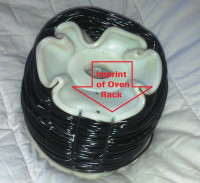
But seeing we're here already, and it's slow day at 91-99*%RH & apparent -0.5?C at midday...
I thought it worth sharing on of my early learnin's.
Don't try this at home.
*The other learnin, of you can't see the hills for the fog, apparently that means it is 99%RH.
-----Original Message-----
Sent: Tue, 6 Jul 2021 08:53
To: 'OpenSCAD general discussion'
Subject: [OpenSCAD] Re: loooooooong f6, like 10+ minutes but works finally

Your hair dryer pipe will is not likely to get moisture below the surface of the filament.
These things suck-up moisture and with enough time it is distributed evenly through the
Hence things like ovens or Nopheads box, with time the moisture leeches out.
Even a big plastic box with a large pack of damp-rid works, but it needs time.
If you don't have time for now, see if you can quick delivery of a fresh spool.
-----Original Message-----
Sent: Tue, 6 Jul 2021 05:01
Subject: [OpenSCAD] Re: loooooooong f6, like 10+ minutes but works finally
However, in this thread that all have snipped, without comment, my
suggestion of feeding the filament thru a long (5 feet) plastic pipe
with heated air flow at 70-90C flowing in the pipe, placed between the
spool and the printer with a couple feet of air to cool it between the
end of the pipe and the extruder, Is that so off the wall as to be
This email has been checked for viruses by AVG.
This thread is getting way off-topic for OpenSCAD Support!
But seeing we're here already, and it's slow day at 91-99*%RH & apparent -0.5?C at midday...
I thought it worth sharing on of my early learnin's.
Don't try this at home.
*The other learnin, of you can't see the hills for the fog, apparently that means it is 99%RH.
> -----Original Message-----
> From: MichaelAtOz [mailto:oz.at.michael@gmail.com]
> Sent: Tue, 6 Jul 2021 08:53
> To: 'OpenSCAD general discussion'
> Subject: [OpenSCAD] Re: loooooooong f6, like 10+ minutes but works finally
>
> Gene,
>
> Your hair dryer pipe will is not likely to get moisture below the surface of the filament.
> These things suck-up moisture and with enough time it is distributed evenly through the
> material.
> Hence things like ovens or Nopheads box, with time the moisture leeches out.
> Even a big plastic box with a large pack of damp-rid works, but it needs time.
> If you don't have time for now, see if you can quick delivery of a fresh spool.
>
> > -----Original Message-----
> > From: Gene Heskett [mailto:gheskett@shentel.net]
> > Sent: Tue, 6 Jul 2021 05:01
> > To: discuss@lists.openscad.org
> > Subject: [OpenSCAD] Re: loooooooong f6, like 10+ minutes but works finally
> >
> > However, in this thread that all have snipped, without comment, my
> > suggestion of feeding the filament thru a long (5 feet) plastic pipe
> > with heated air flow at 70-90C flowing in the pipe, placed between the
> > spool and the printer with a couple feet of air to cool it between the
> > end of the pipe and the extruder, Is that so off the wall as to be
> > ignored?
> >
>
>
>
> --
> This email has been checked for viruses by AVG.
> https://www.avg.com
> _______________________________________________
> OpenSCAD mailing list
> To unsubscribe send an email to discuss-leave@lists.openscad.org
--
This email has been checked for viruses by AVG.
https://www.avg.com
RW
Rob Ward
Tue, Jul 6, 2021 6:20 AM
Wouldn't it better to blow the heated air from the end closest to the printer to maximise the gradient of heated dried air max-ing just before the filament enters the printer? Rolls of cheap black irrigation pipe looped up next to my printer are springing to mind to get a more compact system. The pipe would only need to be long enough that the exiting air was at room temperature (unless the printer room is heated seasonal variations maybe needed, no such luck in my shed unfortunately.) Then solving the dust problem would be next.
I like the on demand idea.
Cheers, RobW
On 6 July 2021 7:15:16 am AEST, Jordan Brown openscad@jordan.maileater.net wrote:
On 7/5/2021 12:53 PM, nop head wrote:
A 5ft heated pipe seems far less convenient and energy inefficient
than an insulated box that encloses the spool and warms it.
On the other hand, the heated pipe is more of a "demand dryer";
presumably you could swap from one spool of filament to another without
substantial delay. With an insulated box it seems like you'd have to
"cook" the new spool for a while, or keep the spools in some other
low-humidity storage device.
But mostly I'm listening to this conversation and wondering what part
of
the world you all are in. Here in inland Los Angeles, I just keep my
filament sitting out, and I have spools of PLA that are five years old
and don't give me any trouble.
Or maybe the flaws are small enough that I just don't know better.
Wouldn't it better to blow the heated air from the end closest to the printer to maximise the gradient of heated dried air max-ing just before the filament enters the printer? Rolls of cheap black irrigation pipe looped up next to my printer are springing to mind to get a more compact system. The pipe would only need to be long enough that the exiting air was at room temperature (unless the printer room is heated seasonal variations maybe needed, no such luck in my shed unfortunately.) Then solving the dust problem would be next.
I like the on demand idea.
Cheers, RobW
On 6 July 2021 7:15:16 am AEST, Jordan Brown <openscad@jordan.maileater.net> wrote:
>On 7/5/2021 12:53 PM, nop head wrote:
>> A 5ft heated pipe seems far less convenient and energy inefficient
>> than an insulated box that encloses the spool and warms it.
>
>On the other hand, the heated pipe is more of a "demand dryer";
>presumably you could swap from one spool of filament to another without
>substantial delay. With an insulated box it seems like you'd have to
>"cook" the new spool for a while, or keep the spools in some other
>low-humidity storage device.
>
>But mostly I'm listening to this conversation and wondering what part
>of
>the world you all are in. Here in inland Los Angeles, I just keep my
>filament sitting out, and I have spools of PLA that are five years old
>and don't give me any trouble.
>
>Or maybe the flaws are small enough that I just don't know better.
GH
Gene Heskett
Tue, Jul 6, 2021 8:36 AM
On Monday 05 July 2021 22:35:26 MichaelAtOz wrote:
This thread is getting way off-topic for OpenSCAD Support!
No argument there. But I've done several net searches for a mailing list
for such conversations without getting a hit yet.
And since OpenSCAD is so well suited for building something we can slice
and make, here I am.
Where else could I find out that cura goes into an ape excrement of
retractions that kill the printer if it has to retract to get to the
next tooth?
I now have code for the loose belt that doesn't trigger that, and my next
step is to import code I've already written, modify it
for about .5mm bigger internal facing teeth because I can't reduce the
tooth circles of the teeth any more without triggering an extra hours
worth of useless retractions that only serve to jam up the hotend, and
for the diff OD's of the last 2 parts, including locking keys to prevent
slippage rotation when the going gets hard. And added an assembly clip
to hold it all together with else I'll have to superglue the assembly
with no chance of repair if it does fail.
And PETG seems to be enough more flexible than PLA, allowing the
additional thickness to satisfy the retraction trigger which adds an
hour to the render time estimate cura gives, doing it without triggering
a fatigue break in just seconds. This last part has now been run at 3000
revs several times until my fingers keeping it from rotating are numb
from the vibration several times now. PLA wouldn't survive that for 3
seconds. And OpenSCAD's ease of doing modifications in .01mm increments
makes that part easy.
There seems to be a plethora of usefull info here from folks also rowing
in a similar boat and I'm very gratefull for your willingness to share
it.
There is one other mailing list on the net that is really helpfull,
actually a pair, one for users, and one for the developers of LinuxCNC.
You will find me on those lists too, sharing my electronics knowledge
with those folks. The biggest impediment to using OpenSCAD to make parts
in steel, is the lack of a translator that can make use of the gcode
features LinuxCNC can make a machine do. It can do loops, which cannot
be done by any interpreter extant, they all get the job done but cura
has to generate several gigabytes of gcode by unrolling the loops into
teeny little straight line moves. I've written 90 line programs for
LinuxCNC that took 3 days to run.
*The other learnin, of you can't see the hills for the fog, apparently
that means it is 99%RH.
We get a lot of that about daybreak here. But methinks that roll got a
little too warm. Just a wee bit. :) Which might be considered odd, since
this is wintertime in Oz. At 39 degrees north, our AC's are working
overtime. Not at 3 am tonight, but probably by 10 am.
Cheers, Gene Heskett
"There are four boxes to be used in defense of liberty:
soap, ballot, jury, and ammo. Please use in that order."
-Ed Howdershelt (Author)
If we desire respect for the law, we must first make the law respectable.
On Monday 05 July 2021 22:35:26 MichaelAtOz wrote:
> This thread is getting way off-topic for OpenSCAD Support!
No argument there. But I've done several net searches for a mailing list
for such conversations without getting a hit yet.
And since OpenSCAD is so well suited for building something we can slice
and make, here I am.
Where else could I find out that cura goes into an ape excrement of
retractions that kill the printer if it has to retract to get to the
next tooth?
I now have code for the loose belt that doesn't trigger that, and my next
step is to import code I've already written, modify it
for about .5mm bigger internal facing teeth because I can't reduce the
tooth circles of the teeth any more without triggering an extra hours
worth of useless retractions that only serve to jam up the hotend, and
for the diff OD's of the last 2 parts, including locking keys to prevent
slippage rotation when the going gets hard. And added an assembly clip
to hold it all together with else I'll have to superglue the assembly
with no chance of repair if it does fail.
And PETG seems to be enough more flexible than PLA, allowing the
additional thickness to satisfy the retraction trigger which adds an
hour to the render time estimate cura gives, doing it without triggering
a fatigue break in just seconds. This last part has now been run at 3000
revs several times until my fingers keeping it from rotating are numb
from the vibration several times now. PLA wouldn't survive that for 3
seconds. And OpenSCAD's ease of doing modifications in .01mm increments
makes that part easy.
There seems to be a plethora of usefull info here from folks also rowing
in a similar boat and I'm very gratefull for your willingness to share
it.
There is one other mailing list on the net that is really helpfull,
actually a pair, one for users, and one for the developers of LinuxCNC.
You will find me on those lists too, sharing my electronics knowledge
with those folks. The biggest impediment to using OpenSCAD to make parts
in steel, is the lack of a translator that can make use of the gcode
features LinuxCNC can make a machine do. It can do loops, which cannot
be done by any interpreter extant, they all get the job done but cura
has to generate several gigabytes of gcode by unrolling the loops into
teeny little straight line moves. I've written 90 line programs for
LinuxCNC that took 3 days to run.
> *The other learnin, of you can't see the hills for the fog, apparently
> that means it is 99%RH.
>
We get a lot of that about daybreak here. But methinks that roll got a
little too warm. Just a wee bit. :) Which might be considered odd, since
this is wintertime in Oz. At 39 degrees north, our AC's are working
overtime. Not at 3 am tonight, but probably by 10 am.
Cheers, Gene Heskett
--
"There are four boxes to be used in defense of liberty:
soap, ballot, jury, and ammo. Please use in that order."
-Ed Howdershelt (Author)
If we desire respect for the law, we must first make the law respectable.
- Louis D. Brandeis
Genes Web page <http://geneslinuxbox.net:6309/gene>
NH
nop head
Tue, Jul 6, 2021 8:58 AM
I never need to take retractions into account when designing. There is
something wrong with your printer or slicer config if they cause a jam or
take a significant time.
I also design 2D parts that I route with Linux CNC and have no problem with
short segments.
On Tue, 6 Jul 2021 at 09:36, Gene Heskett gheskett@shentel.net wrote:
On Monday 05 July 2021 22:35:26 MichaelAtOz wrote:
This thread is getting way off-topic for OpenSCAD Support!
No argument there. But I've done several net searches for a mailing list
for such conversations without getting a hit yet.
And since OpenSCAD is so well suited for building something we can slice
and make, here I am.
Where else could I find out that cura goes into an ape excrement of
retractions that kill the printer if it has to retract to get to the
next tooth?
I now have code for the loose belt that doesn't trigger that, and my next
step is to import code I've already written, modify it
for about .5mm bigger internal facing teeth because I can't reduce the
tooth circles of the teeth any more without triggering an extra hours
worth of useless retractions that only serve to jam up the hotend, and
for the diff OD's of the last 2 parts, including locking keys to prevent
slippage rotation when the going gets hard. And added an assembly clip
to hold it all together with else I'll have to superglue the assembly
with no chance of repair if it does fail.
And PETG seems to be enough more flexible than PLA, allowing the
additional thickness to satisfy the retraction trigger which adds an
hour to the render time estimate cura gives, doing it without triggering
a fatigue break in just seconds. This last part has now been run at 3000
revs several times until my fingers keeping it from rotating are numb
from the vibration several times now. PLA wouldn't survive that for 3
seconds. And OpenSCAD's ease of doing modifications in .01mm increments
makes that part easy.
There seems to be a plethora of usefull info here from folks also rowing
in a similar boat and I'm very gratefull for your willingness to share
it.
There is one other mailing list on the net that is really helpfull,
actually a pair, one for users, and one for the developers of LinuxCNC.
You will find me on those lists too, sharing my electronics knowledge
with those folks. The biggest impediment to using OpenSCAD to make parts
in steel, is the lack of a translator that can make use of the gcode
features LinuxCNC can make a machine do. It can do loops, which cannot
be done by any interpreter extant, they all get the job done but cura
has to generate several gigabytes of gcode by unrolling the loops into
teeny little straight line moves. I've written 90 line programs for
LinuxCNC that took 3 days to run.
*The other learnin, of you can't see the hills for the fog, apparently
that means it is 99%RH.
We get a lot of that about daybreak here. But methinks that roll got a
little too warm. Just a wee bit. :) Which might be considered odd, since
this is wintertime in Oz. At 39 degrees north, our AC's are working
overtime. Not at 3 am tonight, but probably by 10 am.
Cheers, Gene Heskett
"There are four boxes to be used in defense of liberty:
soap, ballot, jury, and ammo. Please use in that order."
-Ed Howdershelt (Author)
If we desire respect for the law, we must first make the law respectable.
OpenSCAD mailing list
To unsubscribe send an email to discuss-leave@lists.openscad.org
I never need to take retractions into account when designing. There is
something wrong with your printer or slicer config if they cause a jam or
take a significant time.
I also design 2D parts that I route with Linux CNC and have no problem with
short segments.
On Tue, 6 Jul 2021 at 09:36, Gene Heskett <gheskett@shentel.net> wrote:
> On Monday 05 July 2021 22:35:26 MichaelAtOz wrote:
>
> > This thread is getting way off-topic for OpenSCAD Support!
>
> No argument there. But I've done several net searches for a mailing list
> for such conversations without getting a hit yet.
>
> And since OpenSCAD is so well suited for building something we can slice
> and make, here I am.
>
> Where else could I find out that cura goes into an ape excrement of
> retractions that kill the printer if it has to retract to get to the
> next tooth?
>
> I now have code for the loose belt that doesn't trigger that, and my next
> step is to import code I've already written, modify it
> for about .5mm bigger internal facing teeth because I can't reduce the
> tooth circles of the teeth any more without triggering an extra hours
> worth of useless retractions that only serve to jam up the hotend, and
> for the diff OD's of the last 2 parts, including locking keys to prevent
> slippage rotation when the going gets hard. And added an assembly clip
> to hold it all together with else I'll have to superglue the assembly
> with no chance of repair if it does fail.
>
> And PETG seems to be enough more flexible than PLA, allowing the
> additional thickness to satisfy the retraction trigger which adds an
> hour to the render time estimate cura gives, doing it without triggering
> a fatigue break in just seconds. This last part has now been run at 3000
> revs several times until my fingers keeping it from rotating are numb
> from the vibration several times now. PLA wouldn't survive that for 3
> seconds. And OpenSCAD's ease of doing modifications in .01mm increments
> makes that part easy.
>
> There seems to be a plethora of usefull info here from folks also rowing
> in a similar boat and I'm very gratefull for your willingness to share
> it.
>
> There is one other mailing list on the net that is really helpfull,
> actually a pair, one for users, and one for the developers of LinuxCNC.
> You will find me on those lists too, sharing my electronics knowledge
> with those folks. The biggest impediment to using OpenSCAD to make parts
> in steel, is the lack of a translator that can make use of the gcode
> features LinuxCNC can make a machine do. It can do loops, which cannot
> be done by any interpreter extant, they all get the job done but cura
> has to generate several gigabytes of gcode by unrolling the loops into
> teeny little straight line moves. I've written 90 line programs for
> LinuxCNC that took 3 days to run.
>
> > *The other learnin, of you can't see the hills for the fog, apparently
> > that means it is 99%RH.
> >
> We get a lot of that about daybreak here. But methinks that roll got a
> little too warm. Just a wee bit. :) Which might be considered odd, since
> this is wintertime in Oz. At 39 degrees north, our AC's are working
> overtime. Not at 3 am tonight, but probably by 10 am.
>
> Cheers, Gene Heskett
> --
> "There are four boxes to be used in defense of liberty:
> soap, ballot, jury, and ammo. Please use in that order."
> -Ed Howdershelt (Author)
> If we desire respect for the law, we must first make the law respectable.
> - Louis D. Brandeis
> Genes Web page <http://geneslinuxbox.net:6309/gene>
> _______________________________________________
> OpenSCAD mailing list
> To unsubscribe send an email to discuss-leave@lists.openscad.org
>
GH
Gene Heskett
Tue, Jul 6, 2021 9:12 AM
On Tuesday 06 July 2021 02:20:14 Rob Ward wrote:
Wouldn't it better to blow the heated air from the end closest to the
printer to maximise the gradient of heated dried air max-ing just
before the filament enters the printer? Rolls of cheap black
irrigation pipe looped up next to my printer are springing to mind to
get a more compact system. The pipe would only need to be long enough
that the exiting air was at room temperature (unless the printer room
is heated seasonal variations maybe needed, no such luck in my shed
unfortunately.) Then solving the dust problem would be next. I like
the on demand idea.
Cheers, RobW
That will very quickly run you up against the limit known well by
electricians, you can't pull wire around more than 3 corners in the
conduit you install. Even when using wire lube affectionately known as
snot. One 90 degree bend is ok, two gets difficult and 3 such bends is
get out a come-a-long hard. Since no lube is allowed on the filaments,
you would be in trouble by the time your water pipe has made half a turn
of that coil. Not even capricorn tubing is immune to that, which is why
I cringe at the printers that put the extruder on the left end of the x
transport because the tubing is bent nearly 180 degrees from there to
the head where it has to turn an additional 90 degrees to enter the top
of the hotend. Much much worse when the carriage is at the left end of
its travel. It only works because the tubing is being flexed as the x
axis moves, tending to break the friction bond. The ender 5, with its
180 degree bend at both ends of the x travel at least equalizes that
drag, but it would be bunches better if the spool was moved to the top
frame and the extruder were turned upside down and moved to the peak of
a pyramid centered on top of the machine so it was much closer to a
straight line from the extruder to the hotend.
On 6 July 2021 7:15:16 am AEST, Jordan Brown
On 7/5/2021 12:53 PM, nop head wrote:
A 5ft heated pipe seems far less convenient and energy inefficient
than an insulated box that encloses the spool and warms it.
On the other hand, the heated pipe is more of a "demand dryer";
presumably you could swap from one spool of filament to another
without substantial delay. With an insulated box it seems like
you'd have to "cook" the new spool for a while, or keep the spools
in some other low-humidity storage device.
But mostly I'm listening to this conversation and wondering what part
of
the world you all are in. Here in inland Los Angeles, I just keep my
filament sitting out, and I have spools of PLA that are five years
old and don't give me any trouble.
Or maybe the flaws are small enough that I just don't know better.
Cheers, Gene Heskett
"There are four boxes to be used in defense of liberty:
soap, ballot, jury, and ammo. Please use in that order."
-Ed Howdershelt (Author)
If we desire respect for the law, we must first make the law respectable.
On Tuesday 06 July 2021 02:20:14 Rob Ward wrote:
> Wouldn't it better to blow the heated air from the end closest to the
> printer to maximise the gradient of heated dried air max-ing just
> before the filament enters the printer? Rolls of cheap black
> irrigation pipe looped up next to my printer are springing to mind to
> get a more compact system. The pipe would only need to be long enough
> that the exiting air was at room temperature (unless the printer room
> is heated seasonal variations maybe needed, no such luck in my shed
> unfortunately.) Then solving the dust problem would be next. I like
> the on demand idea.
> Cheers, RobW
>
That will very quickly run you up against the limit known well by
electricians, you can't pull wire around more than 3 corners in the
conduit you install. Even when using wire lube affectionately known as
snot. One 90 degree bend is ok, two gets difficult and 3 such bends is
get out a come-a-long hard. Since no lube is allowed on the filaments,
you would be in trouble by the time your water pipe has made half a turn
of that coil. Not even capricorn tubing is immune to that, which is why
I cringe at the printers that put the extruder on the left end of the x
transport because the tubing is bent nearly 180 degrees from there to
the head where it has to turn an additional 90 degrees to enter the top
of the hotend. Much much worse when the carriage is at the left end of
its travel. It only works because the tubing is being flexed as the x
axis moves, tending to break the friction bond. The ender 5, with its
180 degree bend at both ends of the x travel at least equalizes that
drag, but it would be bunches better if the spool was moved to the top
frame and the extruder were turned upside down and moved to the peak of
a pyramid centered on top of the machine so it was much closer to a
straight line from the extruder to the hotend.
> On 6 July 2021 7:15:16 am AEST, Jordan Brown
<openscad@jordan.maileater.net> wrote:
> >On 7/5/2021 12:53 PM, nop head wrote:
> >> A 5ft heated pipe seems far less convenient and energy inefficient
> >> than an insulated box that encloses the spool and warms it.
> >
> >On the other hand, the heated pipe is more of a "demand dryer";
> >presumably you could swap from one spool of filament to another
> > without substantial delay. With an insulated box it seems like
> > you'd have to "cook" the new spool for a while, or keep the spools
> > in some other low-humidity storage device.
> >
> >But mostly I'm listening to this conversation and wondering what part
> >of
> >the world you all are in. Here in inland Los Angeles, I just keep my
> >filament sitting out, and I have spools of PLA that are five years
> > old and don't give me any trouble.
> >
> >Or maybe the flaws are small enough that I just don't know better.
Cheers, Gene Heskett
--
"There are four boxes to be used in defense of liberty:
soap, ballot, jury, and ammo. Please use in that order."
-Ed Howdershelt (Author)
If we desire respect for the law, we must first make the law respectable.
- Louis D. Brandeis
Genes Web page <http://geneslinuxbox.net:6309/gene>
NH
nop head
Tue, Jul 6, 2021 10:40 AM
PTFE is the most slippery substance known to man I think. I have no problem
pulling filament through 180 degree loops with a further 90 into the
extruder. And brake cables on bikes snake around a lot, which is where
Bowden tubes came from.
I have known people lubricate filament with oil in the early days of
Reprap, so you can also lubricate filament if you need to.
You do seem to have problems with 3D printing that just works for the rest
of us.
On Tue, 6 Jul 2021 at 10:12, Gene Heskett gheskett@shentel.net wrote:
On Tuesday 06 July 2021 02:20:14 Rob Ward wrote:
Wouldn't it better to blow the heated air from the end closest to the
printer to maximise the gradient of heated dried air max-ing just
before the filament enters the printer? Rolls of cheap black
irrigation pipe looped up next to my printer are springing to mind to
get a more compact system. The pipe would only need to be long enough
that the exiting air was at room temperature (unless the printer room
is heated seasonal variations maybe needed, no such luck in my shed
unfortunately.) Then solving the dust problem would be next. I like
the on demand idea.
Cheers, RobW
That will very quickly run you up against the limit known well by
electricians, you can't pull wire around more than 3 corners in the
conduit you install. Even when using wire lube affectionately known as
snot. One 90 degree bend is ok, two gets difficult and 3 such bends is
get out a come-a-long hard. Since no lube is allowed on the filaments,
you would be in trouble by the time your water pipe has made half a turn
of that coil. Not even capricorn tubing is immune to that, which is why
I cringe at the printers that put the extruder on the left end of the x
transport because the tubing is bent nearly 180 degrees from there to
the head where it has to turn an additional 90 degrees to enter the top
of the hotend. Much much worse when the carriage is at the left end of
its travel. It only works because the tubing is being flexed as the x
axis moves, tending to break the friction bond. The ender 5, with its
180 degree bend at both ends of the x travel at least equalizes that
drag, but it would be bunches better if the spool was moved to the top
frame and the extruder were turned upside down and moved to the peak of
a pyramid centered on top of the machine so it was much closer to a
straight line from the extruder to the hotend.
On 6 July 2021 7:15:16 am AEST, Jordan Brown
On 7/5/2021 12:53 PM, nop head wrote:
A 5ft heated pipe seems far less convenient and energy inefficient
than an insulated box that encloses the spool and warms it.
On the other hand, the heated pipe is more of a "demand dryer";
presumably you could swap from one spool of filament to another
without substantial delay. With an insulated box it seems like
you'd have to "cook" the new spool for a while, or keep the spools
in some other low-humidity storage device.
But mostly I'm listening to this conversation and wondering what part
of
the world you all are in. Here in inland Los Angeles, I just keep my
filament sitting out, and I have spools of PLA that are five years
old and don't give me any trouble.
Or maybe the flaws are small enough that I just don't know better.
Cheers, Gene Heskett
"There are four boxes to be used in defense of liberty:
soap, ballot, jury, and ammo. Please use in that order."
-Ed Howdershelt (Author)
If we desire respect for the law, we must first make the law respectable.
OpenSCAD mailing list
To unsubscribe send an email to discuss-leave@lists.openscad.org
PTFE is the most slippery substance known to man I think. I have no problem
pulling filament through 180 degree loops with a further 90 into the
extruder. And brake cables on bikes snake around a lot, which is where
Bowden tubes came from.
I have known people lubricate filament with oil in the early days of
Reprap, so you can also lubricate filament if you need to.
You do seem to have problems with 3D printing that just works for the rest
of us.
On Tue, 6 Jul 2021 at 10:12, Gene Heskett <gheskett@shentel.net> wrote:
> On Tuesday 06 July 2021 02:20:14 Rob Ward wrote:
>
> > Wouldn't it better to blow the heated air from the end closest to the
> > printer to maximise the gradient of heated dried air max-ing just
> > before the filament enters the printer? Rolls of cheap black
> > irrigation pipe looped up next to my printer are springing to mind to
> > get a more compact system. The pipe would only need to be long enough
> > that the exiting air was at room temperature (unless the printer room
> > is heated seasonal variations maybe needed, no such luck in my shed
> > unfortunately.) Then solving the dust problem would be next. I like
> > the on demand idea.
> > Cheers, RobW
> >
> That will very quickly run you up against the limit known well by
> electricians, you can't pull wire around more than 3 corners in the
> conduit you install. Even when using wire lube affectionately known as
> snot. One 90 degree bend is ok, two gets difficult and 3 such bends is
> get out a come-a-long hard. Since no lube is allowed on the filaments,
> you would be in trouble by the time your water pipe has made half a turn
> of that coil. Not even capricorn tubing is immune to that, which is why
> I cringe at the printers that put the extruder on the left end of the x
> transport because the tubing is bent nearly 180 degrees from there to
> the head where it has to turn an additional 90 degrees to enter the top
> of the hotend. Much much worse when the carriage is at the left end of
> its travel. It only works because the tubing is being flexed as the x
> axis moves, tending to break the friction bond. The ender 5, with its
> 180 degree bend at both ends of the x travel at least equalizes that
> drag, but it would be bunches better if the spool was moved to the top
> frame and the extruder were turned upside down and moved to the peak of
> a pyramid centered on top of the machine so it was much closer to a
> straight line from the extruder to the hotend.
>
> > On 6 July 2021 7:15:16 am AEST, Jordan Brown
> <openscad@jordan.maileater.net> wrote:
> > >On 7/5/2021 12:53 PM, nop head wrote:
> > >> A 5ft heated pipe seems far less convenient and energy inefficient
> > >> than an insulated box that encloses the spool and warms it.
> > >
> > >On the other hand, the heated pipe is more of a "demand dryer";
> > >presumably you could swap from one spool of filament to another
> > > without substantial delay. With an insulated box it seems like
> > > you'd have to "cook" the new spool for a while, or keep the spools
> > > in some other low-humidity storage device.
> > >
> > >But mostly I'm listening to this conversation and wondering what part
> > >of
> > >the world you all are in. Here in inland Los Angeles, I just keep my
> > >filament sitting out, and I have spools of PLA that are five years
> > > old and don't give me any trouble.
> > >
> > >Or maybe the flaws are small enough that I just don't know better.
>
>
> Cheers, Gene Heskett
> --
> "There are four boxes to be used in defense of liberty:
> soap, ballot, jury, and ammo. Please use in that order."
> -Ed Howdershelt (Author)
> If we desire respect for the law, we must first make the law respectable.
> - Louis D. Brandeis
> Genes Web page <http://geneslinuxbox.net:6309/gene>
> _______________________________________________
> OpenSCAD mailing list
> To unsubscribe send an email to discuss-leave@lists.openscad.org
>
D
dpa
Tue, Jul 6, 2021 10:56 AM
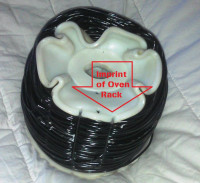
Don't try this at home.
Oh dear!
Oven with convection would actually be good if you can just keep the
temperature accurate....
I constructed an Arduino with a light sensor, temperature sensor and step
motor (+ knob+display+buzzer) and can control the oven to +-0.5 degree
https://youtu.be/jbKlLoTx0es. My problem is: Arduino freezes after a
while.... so I am at the same, dumb situation as before (and fear the same
result as your foto).
> Don't try this at home.
>
> Oh dear!
Oven with convection would actually be good if you can just keep the
temperature accurate....
I constructed an Arduino with a light sensor, temperature sensor and step
motor (+ knob+display+buzzer) and can control the oven to +-0.5 degree
<https://youtu.be/jbKlLoTx0es>. My problem is: Arduino freezes after a
while.... so I am at the same, dumb situation as before (and fear the same
result as your foto).
NH
nop head
Tue, Jul 6, 2021 11:14 AM
Oven with convection would actually be good if you can just keep the
temperature accurate....
I constructed an Arduino with a light sensor, temperature sensor and step
motor (+ knob+display+buzzer) and can control the oven to +-0.5 degree
https://youtu.be/jbKlLoTx0es. My problem is: Arduino freezes after a
while.... so I am at the same, dumb situation as before (and fear the same
result as your foto).
OpenSCAD mailing list
To unsubscribe send an email to discuss-leave@lists.openscad.org
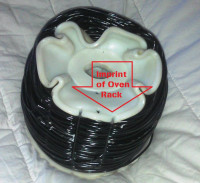
The Arduino probably crashes due to the noise from the brushes of the DC
motor in the servo. Perhaps separate them physically and put the servo
wires through a ferrite ring. See
https://hydraraptor.blogspot.com/2007/09/dc-to-daylight.html
On Tue, 6 Jul 2021 at 11:56, dpa <sc@pankd.de> wrote:
> Don't try this at home.
>>
>> Oh dear!
> Oven with convection would actually be good if you can just keep the
> temperature accurate....
> I constructed an Arduino with a light sensor, temperature sensor and step
> motor (+ knob+display+buzzer) and can control the oven to +-0.5 degree
> <https://youtu.be/jbKlLoTx0es>. My problem is: Arduino freezes after a
> while.... so I am at the same, dumb situation as before (and fear the same
> result as your foto).
>
> _______________________________________________
> OpenSCAD mailing list
> To unsubscribe send an email to discuss-leave@lists.openscad.org
>
RW
Ray West
Tue, Jul 6, 2021 1:07 PM
Maybe we need a new section, entitled 'Gene's Blog', or something. The
fact remains, although this is now not about openscad, openscad is a
tool to get to a destination, whether that is a physical object or
something more ephemeral, so keeping to the new theme within this
thread wrt filament drying, it seems a bit daft, to keep a whole spool
of filament dry, when all you need is the few metres you are printing.
It is OK, if you are, say, continuously printing the same filament type,
but when experimenting with different colours/types, you can end up with
a dozen or so spools to keep dry. There are plenty of solutions, vacuum
sealing/desiccant, etc. but it is a bit of a hassle/expense. Why not
keep the spools as is, no packaging, and condition what you need as you
use it? that makes more sense to me. So, we could use a relatively small
diameter, slightly heated tube, heating element wrapped around the
outside, holes in tube to let the moist warm air escape - a foot or so
ptfe perforated bowden tube would most likely do, or possibly a larger
tube with warm air blown through. I expect it's been invented before,
and most likely being produced somewhere, but where's the fun in buying
your way out of problems?
There are plenty of cheap temp controllers - I've used this type
https://smile.amazon.co.uk/gp/product/B08RDJZM7X/ref=ppx_yo_dt_b_asin_title_o06_s00?ie=UTF8&psc=1
(If I'd not bought my way out of that problem, the components would have
cost much more than the completed item.
and there are flexible heating elements for home brewing, seed raising,
etc. Could probably make the whole thing for thirty quid.
An acquaintance of mine, lives in Arizona, has no problems with moisture
in 3d print filament, no need for vacuum sealing/whatever. I'm not sure,
if instead of a heated bed, he has a cooled bed...
Maybe we need a new section, entitled 'Gene's Blog', or something. The
fact remains, although this is now not about openscad, openscad is a
tool to get to a destination, whether that is a physical object or
something more ephemeral, so keeping to the new theme within this
thread wrt filament drying, it seems a bit daft, to keep a whole spool
of filament dry, when all you need is the few metres you are printing.
It is OK, if you are, say, continuously printing the same filament type,
but when experimenting with different colours/types, you can end up with
a dozen or so spools to keep dry. There are plenty of solutions, vacuum
sealing/desiccant, etc. but it is a bit of a hassle/expense. Why not
keep the spools as is, no packaging, and condition what you need as you
use it? that makes more sense to me. So, we could use a relatively small
diameter, slightly heated tube, heating element wrapped around the
outside, holes in tube to let the moist warm air escape - a foot or so
ptfe perforated bowden tube would most likely do, or possibly a larger
tube with warm air blown through. I expect it's been invented before,
and most likely being produced somewhere, but where's the fun in buying
your way out of problems?
There are plenty of cheap temp controllers - I've used this type
https://smile.amazon.co.uk/gp/product/B08RDJZM7X/ref=ppx_yo_dt_b_asin_title_o06_s00?ie=UTF8&psc=1
(If I'd not bought my way out of that problem, the components would have
cost much more than the completed item.
and there are flexible heating elements for home brewing, seed raising,
etc. Could probably make the whole thing for thirty quid.
An acquaintance of mine, lives in Arizona, has no problems with moisture
in 3d print filament, no need for vacuum sealing/whatever. I'm not sure,
if instead of a heated bed, he has a cooled bed...