NH
nop head
Mon, Apr 15, 2019 7:29 AM
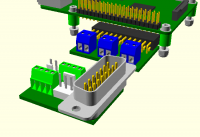
Yes but I have recently removed most of the renders. I now only have them
where there is a 3D difference or intersection. And I also rewrote
everything to avoid as many of those as possible by using unions of
linear_extrudes, rotate_extrudes and hulls.
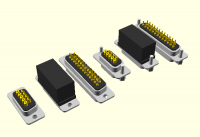
The only render in this picture is for the solder bucket pins that are
hollow tubes with a 45 degree slice off the end. And I render one pin and
duplicate it rather than rendering all the gold pins together, which would
have done a CGAL union.
In the GUI this previews in 0 seconds. On the command line it takes 2
seconds.
[image: image.png]
Previously I rendered everything at the top level for each colour and this
test took 44 seconds, one of the slowest. I only realised recently that
OpenCSG union is totally free and that objects made from the union of lots
of little bits still draw quickly. Difference and intersection take
significant time and don't scale well. If I don't render them in a scene
with hundreds of objects then the GUI becomes unresponsive and I get
z-fighting between negative objects and they go wrong when the camera gets
close.
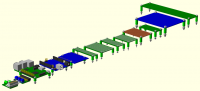
So now I only have 14 renders in about 46 vitamin files and that is what
takes most of the remaining time. These PCBs take about 4.7 seconds.
[image: pcbs.png]
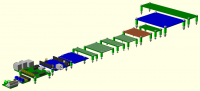
The only renders left are the blue and green terminal housings that are 3D
differences.
[image: image.png]
I used to do all the ways together but to speed it up greatly I render a
single way and duplicate it.
Looking it at it now I realise I could decompose the connector housings
into the union of lots of tiny pieces to avoid any differences and shave
some more time off. Looks like it would be about 0.5 seconds.
On Mon, 15 Apr 2019 at 00:54, MichaelAtOz oz.at.michael@gmail.com wrote:
Noting, for others, that nophead uses render(), so cmd-line preview
includes
the CGAL processing.
Admin - email* me if you need anything, or if I've done something stupid...
- click on my MichaelAtOz label, there is a link to email me.
Unless specifically shown otherwise above, my contribution is in the
Public Domain; to the extent possible under law, I have waived all
copyright and related or neighbouring rights to this work. Obviously
inclusion of works of previous authors is not included in the above.
The TPP is no simple “trade agreement.” Fight it!
http://www.ourfairdeal.org/ time is running out!
Sent from: http://forum.openscad.org/
OpenSCAD mailing list
Discuss@lists.openscad.org
http://lists.openscad.org/mailman/listinfo/discuss_lists.openscad.org
Yes but I have recently removed most of the renders. I now only have them
where there is a 3D difference or intersection. And I also rewrote
everything to avoid as many of those as possible by using unions of
linear_extrudes, rotate_extrudes and hulls.
The only render in this picture is for the solder bucket pins that are
hollow tubes with a 45 degree slice off the end. And I render one pin and
duplicate it rather than rendering all the gold pins together, which would
have done a CGAL union.
In the GUI this previews in 0 seconds. On the command line it takes 2
seconds.
[image: image.png]
Previously I rendered everything at the top level for each colour and this
test took 44 seconds, one of the slowest. I only realised recently that
OpenCSG union is totally free and that objects made from the union of lots
of little bits still draw quickly. Difference and intersection take
significant time and don't scale well. If I don't render them in a scene
with hundreds of objects then the GUI becomes unresponsive and I get
z-fighting between negative objects and they go wrong when the camera gets
close.
So now I only have 14 renders in about 46 vitamin files and that is what
takes most of the remaining time. These PCBs take about 4.7 seconds.
[image: pcbs.png]
The only renders left are the blue and green terminal housings that are 3D
differences.
[image: image.png]
I used to do all the ways together but to speed it up greatly I render a
single way and duplicate it.
Looking it at it now I realise I could decompose the connector housings
into the union of lots of tiny pieces to avoid any differences and shave
some more time off. Looks like it would be about 0.5 seconds.
On Mon, 15 Apr 2019 at 00:54, MichaelAtOz <oz.at.michael@gmail.com> wrote:
> Noting, for others, that nophead uses render(), so cmd-line preview
> includes
> the CGAL processing.
>
>
>
> -----
> Admin - email* me if you need anything, or if I've done something stupid...
>
> * click on my MichaelAtOz label, there is a link to email me.
>
> Unless specifically shown otherwise above, my contribution is in the
> Public Domain; to the extent possible under law, I have waived all
> copyright and related or neighbouring rights to this work. Obviously
> inclusion of works of previous authors is not included in the above.
>
> The TPP is no simple “trade agreement.” Fight it!
> http://www.ourfairdeal.org/ time is running out!
> --
> Sent from: http://forum.openscad.org/
>
> _______________________________________________
> OpenSCAD mailing list
> Discuss@lists.openscad.org
> http://lists.openscad.org/mailman/listinfo/discuss_lists.openscad.org
>
NH
nop head
Mon, Apr 15, 2019 12:55 PM
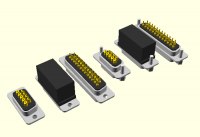
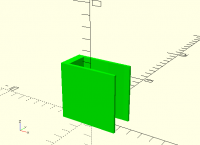
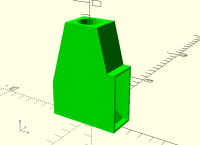
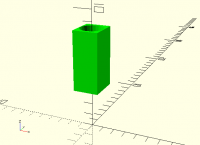
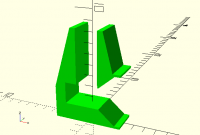
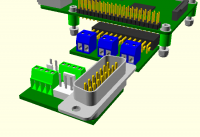
Yes each housing cell is now a union of three linear extrudes, one
horizontal and two vertical, avoiding any renders. Time is now down to 4.1
seconds.
[image: image.png]
[image: image.png]
[image: image.png]
[image: image.png]
On Mon, 15 Apr 2019 at 08:29, nop head nop.head@gmail.com wrote:
Yes but I have recently removed most of the renders. I now only have them
where there is a 3D difference or intersection. And I also rewrote
everything to avoid as many of those as possible by using unions of
linear_extrudes, rotate_extrudes and hulls.
The only render in this picture is for the solder bucket pins that are
hollow tubes with a 45 degree slice off the end. And I render one pin and
duplicate it rather than rendering all the gold pins together, which would
have done a CGAL union.
In the GUI this previews in 0 seconds. On the command line it takes 2
seconds.
[image: image.png]
Previously I rendered everything at the top level for each colour and this
test took 44 seconds, one of the slowest. I only realised recently that
OpenCSG union is totally free and that objects made from the union of lots
of little bits still draw quickly. Difference and intersection take
significant time and don't scale well. If I don't render them in a scene
with hundreds of objects then the GUI becomes unresponsive and I get
z-fighting between negative objects and they go wrong when the camera gets
close.
So now I only have 14 renders in about 46 vitamin files and that is what
takes most of the remaining time. These PCBs take about 4.7 seconds.
[image: pcbs.png]
The only renders left are the blue and green terminal housings that are 3D
differences.
[image: image.png]
I used to do all the ways together but to speed it up greatly I render a
single way and duplicate it.
Looking it at it now I realise I could decompose the connector housings
into the union of lots of tiny pieces to avoid any differences and shave
some more time off. Looks like it would be about 0.5 seconds.
On Mon, 15 Apr 2019 at 00:54, MichaelAtOz oz.at.michael@gmail.com wrote:
Noting, for others, that nophead uses render(), so cmd-line preview
includes
the CGAL processing.
Admin - email* me if you need anything, or if I've done something
stupid...
- click on my MichaelAtOz label, there is a link to email me.
Unless specifically shown otherwise above, my contribution is in the
Public Domain; to the extent possible under law, I have waived all
copyright and related or neighbouring rights to this work. Obviously
inclusion of works of previous authors is not included in the above.
The TPP is no simple “trade agreement.” Fight it!
http://www.ourfairdeal.org/ time is running out!
Sent from: http://forum.openscad.org/
OpenSCAD mailing list
Discuss@lists.openscad.org
http://lists.openscad.org/mailman/listinfo/discuss_lists.openscad.org
Yes each housing cell is now a union of three linear extrudes, one
horizontal and two vertical, avoiding any renders. Time is now down to 4.1
seconds.
[image: image.png]
[image: image.png]
[image: image.png]
[image: image.png]
On Mon, 15 Apr 2019 at 08:29, nop head <nop.head@gmail.com> wrote:
> Yes but I have recently removed most of the renders. I now only have them
> where there is a 3D difference or intersection. And I also rewrote
> everything to avoid as many of those as possible by using unions of
> linear_extrudes, rotate_extrudes and hulls.
>
> The only render in this picture is for the solder bucket pins that are
> hollow tubes with a 45 degree slice off the end. And I render one pin and
> duplicate it rather than rendering all the gold pins together, which would
> have done a CGAL union.
>
> In the GUI this previews in 0 seconds. On the command line it takes 2
> seconds.
>
> [image: image.png]
>
> Previously I rendered everything at the top level for each colour and this
> test took 44 seconds, one of the slowest. I only realised recently that
> OpenCSG union is totally free and that objects made from the union of lots
> of little bits still draw quickly. Difference and intersection take
> significant time and don't scale well. If I don't render them in a scene
> with hundreds of objects then the GUI becomes unresponsive and I get
> z-fighting between negative objects and they go wrong when the camera gets
> close.
>
> So now I only have 14 renders in about 46 vitamin files and that is what
> takes most of the remaining time. These PCBs take about 4.7 seconds.
>
> [image: pcbs.png]
>
> The only renders left are the blue and green terminal housings that are 3D
> differences.
>
> [image: image.png]
>
> I used to do all the ways together but to speed it up greatly I render a
> single way and duplicate it.
>
> Looking it at it now I realise I could decompose the connector housings
> into the union of lots of tiny pieces to avoid any differences and shave
> some more time off. Looks like it would be about 0.5 seconds.
>
> On Mon, 15 Apr 2019 at 00:54, MichaelAtOz <oz.at.michael@gmail.com> wrote:
>
>> Noting, for others, that nophead uses render(), so cmd-line preview
>> includes
>> the CGAL processing.
>>
>>
>>
>> -----
>> Admin - email* me if you need anything, or if I've done something
>> stupid...
>>
>> * click on my MichaelAtOz label, there is a link to email me.
>>
>> Unless specifically shown otherwise above, my contribution is in the
>> Public Domain; to the extent possible under law, I have waived all
>> copyright and related or neighbouring rights to this work. Obviously
>> inclusion of works of previous authors is not included in the above.
>>
>> The TPP is no simple “trade agreement.” Fight it!
>> http://www.ourfairdeal.org/ time is running out!
>> --
>> Sent from: http://forum.openscad.org/
>>
>> _______________________________________________
>> OpenSCAD mailing list
>> Discuss@lists.openscad.org
>> http://lists.openscad.org/mailman/listinfo/discuss_lists.openscad.org
>>
>
J
jon
Mon, Apr 15, 2019 1:06 PM
What you are doing is very interesting and useful, but I am a little
confused. I thought I heard that unions were time consuming, and yet
you describe doing a union of linear extrudes. Perhaps I was wrong about
thinking that unions are time consuming.
On 4/15/2019 8:55 AM, nop head wrote:
Yes each housing cell is now a union of three linear extrudes, one
horizontal and two vertical, avoiding any renders. Time is now down to
4.1 seconds.
What you are doing is very interesting and useful, but I am a little
confused. I thought I heard that unions were time consuming, and yet
you describe doing a union of linear extrudes. Perhaps I was wrong about
thinking that unions are time consuming.
On 4/15/2019 8:55 AM, nop head wrote:
> Yes each housing cell is now a union of three linear extrudes, one
> horizontal and two vertical, avoiding any renders. Time is now down to
> 4.1 seconds.
NH
nop head
Mon, Apr 15, 2019 2:10 PM
CGAL 3D union is time very consuming but OpenCSG union seems to have very
little or no overheat at all. It simply draws the pieces on top of each
other I think.
On the other hand OpenCSG difference seems to be somewhat slower because
all the negative objects are drawn as well. Although they should be
invisible they z-fight with other negative and positive objects they happen
to line up with, giving artefacts in assembly views and if they are
oversized they get clipped if you move the camera close. So I put render
around 3D differences to force CGAL to compute the mesh so OpenSCG can just
draw it. That is slow the first time I preview and cached after that.
By changing as much as I can to be unions of extrudes I avoid 3D
differences and can remove nearly all of my renders and get a massive speed
up of the first time preview. For example my half designed 3D printer goes
from about 12 minutes to 2.5 minutes. Most of that time will be rendering
the non-library printed parts specific to that project. I haven't gone
through all those decomposing them as it isn't worth the time for
non-library parts.
When coding with this style thrown together view is no different to preview
because I have removed all the negative objects from OpenCSG.
On Mon, 15 Apr 2019 at 14:06, jon jon@jonbondy.com wrote:
What you are doing is very interesting and useful, but I am a little
confused. I thought I heard that unions were time consuming, and yet
you describe doing a union of linear extrudes. Perhaps I was wrong about
thinking that unions are time consuming.
On 4/15/2019 8:55 AM, nop head wrote:
Yes each housing cell is now a union of three linear extrudes, one
horizontal and two vertical, avoiding any renders. Time is now down to
4.1 seconds.
CGAL 3D union is time very consuming but OpenCSG union seems to have very
little or no overheat at all. It simply draws the pieces on top of each
other I think.
On the other hand OpenCSG difference seems to be somewhat slower because
all the negative objects are drawn as well. Although they should be
invisible they z-fight with other negative and positive objects they happen
to line up with, giving artefacts in assembly views and if they are
oversized they get clipped if you move the camera close. So I put render
around 3D differences to force CGAL to compute the mesh so OpenSCG can just
draw it. That is slow the first time I preview and cached after that.
By changing as much as I can to be unions of extrudes I avoid 3D
differences and can remove nearly all of my renders and get a massive speed
up of the first time preview. For example my half designed 3D printer goes
from about 12 minutes to 2.5 minutes. Most of that time will be rendering
the non-library printed parts specific to that project. I haven't gone
through all those decomposing them as it isn't worth the time for
non-library parts.
When coding with this style thrown together view is no different to preview
because I have removed all the negative objects from OpenCSG.
On Mon, 15 Apr 2019 at 14:06, jon <jon@jonbondy.com> wrote:
> What you are doing is very interesting and useful, but I am a little
> confused. I thought I heard that unions were time consuming, and yet
> you describe doing a union of linear extrudes. Perhaps I was wrong about
> thinking that unions are time consuming.
>
> On 4/15/2019 8:55 AM, nop head wrote:
> > Yes each housing cell is now a union of three linear extrudes, one
> > horizontal and two vertical, avoiding any renders. Time is now down to
> > 4.1 seconds.
>
A
adrianv
Wed, Apr 17, 2019 12:04 AM
On Apr 14, 2019, at 03:44, nop head <
Yes variables seem to re evaluated when you call a function in a used
module but I am sure functions and modules are not recompiled because
that is done at parse time and the AST is cached in the module cache. So
there isn't anything to do for a function unless it is called by a
variable initialisation.
I don't think that's necessary, and even if we continue doing it, it
should be possible to perform some sort of Common Expression Elimination.
This probably went largely unnoticed since until the recently introduced
echo() function, we didn't really have functions with side effects.
It didn't seem like this entirely went un-noticed, given that there's an
open issue from 2014 about it. But without echo it's hard to really nail
down what's happening. It seems more that people just haven't been paying
much attention to performance. And also, perhaps due to the lack of
interest in libraries, people haven't been really trying to write basic
libraries where you might actually call library functions thousands of
times. If your library is something that creates geometry and it takes 10
seconds to run then it doesn't much matter if there's a 0.1 s overhead
because of duplicate to level assignment execution.
There are two things I've found that make "use" slower and I don't know if
they are manifestations of the same thing. When I raised this topic this
time, it was not about assignments at the top level, but about (apparently)
function calls. The first performance concern, which I noted a couple weeks
ago, is that with "use", assignments at the top level get run any time you
execute a function in the library. This means that if you have a bunch of
assignments, perhaps to demonstrate your library, they will get executed
every time any function in the library is called from outside the library.
In my case this was giving me a run time of 10.5 minutes which I reduced to
5 seconds by commenting out the examples in the library file. Note that
this is the specific example given for "use"---that you can include examples
and they won't be run.
The second issue is that it appears to be relatively expensive to call a
function from a "use"ed library if that library is large. I have a test
case where I have the following simple function
function quant(x,y) = floor(x/y+0.5)*y;
in math.scad, a large library file (1500 lines of code). If I run this:
use<BOSL/math.scad>
function quantvect(vec,scale) = [for (v=vec) quant(v,scale)];
x = rands(1,1000,1e5);
y=(quantvect(x,.01));
the run time is 12s. It does not matter whether quant() is defined first or
last in math.scad---run time is the same. If I change "use" to "include"
run time is 0s. If I instead put quant() in a library all by itself and
"use" then run time is 0s. And of course if I put the definition of quant()
directly into my code run time is 0s.
I don't know what, exactly, is causing the slow down but it has to do with
having 10^5 function calls into the large library. If I put quantvect()
into math.scad so there is only 1 function call to the library, it runs in
0s.
It does appear that the obvious solution is to simply ignore "use" and
always use "include". Is there some disadvantage to this approach? I
suppose you lose the ability to "use" files from a library and not expose
their contents to the to level "user". Nophead reported a slight
slowdown...do to reparsing? I'm not sure I understand why that would
happen.
--
Sent from: http://forum.openscad.org/
kintel wrote
>> On Apr 14, 2019, at 03:44, nop head <
> nop.head@
> > wrote:
>>
>> Yes variables seem to re evaluated when you call a function in a used
>> module but I am sure functions and modules are not recompiled because
>> that is done at parse time and the AST is cached in the module cache. So
>> there isn't anything to do for a function unless it is called by a
>> variable initialisation.
>>
> I don't think that's necessary, and even if we continue doing it, it
> should be possible to perform some sort of Common Expression Elimination.
> This probably went largely unnoticed since until the recently introduced
> echo() function, we didn't really have functions with side effects.
It didn't seem like this entirely went un-noticed, given that there's an
open issue from 2014 about it. But without echo it's hard to really nail
down what's happening. It seems more that people just haven't been paying
much attention to performance. And also, perhaps due to the lack of
interest in libraries, people haven't been really trying to write basic
libraries where you might actually call library functions thousands of
times. If your library is something that creates geometry and it takes 10
seconds to run then it doesn't much matter if there's a 0.1 s overhead
because of duplicate to level assignment execution.
There are two things I've found that make "use" slower and I don't know if
they are manifestations of the same thing. When I raised this topic this
time, it was not about assignments at the top level, but about (apparently)
function calls. The first performance concern, which I noted a couple weeks
ago, is that with "use", assignments at the top level get run any time you
execute a function in the library. This means that if you have a bunch of
assignments, perhaps to demonstrate your library, they will get executed
every time any function in the library is called from outside the library.
In my case this was giving me a run time of 10.5 minutes which I reduced to
5 seconds by commenting out the examples in the library file. Note that
this is the specific example given for "use"---that you can include examples
and they won't be run.
The second issue is that it appears to be relatively expensive to call a
function from a "use"ed library if that library is large. I have a test
case where I have the following simple function
function quant(x,y) = floor(x/y+0.5)*y;
in math.scad, a large library file (1500 lines of code). If I run this:
use<BOSL/math.scad>
function quantvect(vec,scale) = [for (v=vec) quant(v,scale)];
x = rands(1,1000,1e5);
y=(quantvect(x,.01));
the run time is 12s. It does not matter whether quant() is defined first or
last in math.scad---run time is the same. If I change "use" to "include"
run time is 0s. If I instead put quant() in a library all by itself and
"use" then run time is 0s. And of course if I put the definition of quant()
directly into my code run time is 0s.
I don't know what, exactly, is causing the slow down but it has to do with
having 10^5 function calls into the large library. If I put quantvect()
into math.scad so there is only 1 function call to the library, it runs in
0s.
It does appear that the obvious solution is to simply ignore "use" and
always use "include". Is there some disadvantage to this approach? I
suppose you lose the ability to "use" files from a library and not expose
their contents to the to level "user". Nophead reported a slight
slowdown...do to reparsing? I'm not sure I understand why that would
happen.
--
Sent from: http://forum.openscad.org/
HJ
Hugo Jackson
Wed, Apr 17, 2019 12:11 AM
It does appear that the obvious solution is to simply ignore "use" and
always use "include". Is there some disadvantage to this approach? I
I use “use” over include in that it allows me to keep test invocations in library files. Include as you know will execute any 0-level commands it encounters when being included… where as “use” only loads the function/module definitions and executes nothing.
> It does appear that the obvious solution is to simply ignore "use" and
> always use "include". Is there some disadvantage to this approach? I
I use “use” over include in that it allows me to keep test invocations in library files. Include as you know will execute any 0-level commands it encounters when being included… where as “use” only loads the function/module definitions and executes nothing.
> suppose you lose the ability to "use" files from a library and not expose
> their contents to the to level "user". Nophead reported a slight
> slowdown...do to reparsing? I'm not sure I understand why that would
> happen.
>
>
>
>
> --
> Sent from: http://forum.openscad.org/
>
> _______________________________________________
> OpenSCAD mailing list
> Discuss@lists.openscad.org
> http://lists.openscad.org/mailman/listinfo/discuss_lists.openscad.org
AC
A. Craig West
Wed, Apr 17, 2019 12:31 AM
I believe "include" doesn't properly track relative directories when
including other files, while "use" does, although this may have been
resolved at some point. I haven't checked lately
On Tue, 16 Apr 2019, 20:12 Hugo Jackson, hugo@apres.net wrote:
It does appear that the obvious solution is to simply ignore "use" and
always use "include". Is there some disadvantage to this approach? I
I use “use” over include in that it allows me to keep test invocations in
library files. Include as you know will execute any 0-level commands it
encounters when being included… where as “use” only loads the
function/module definitions and executes nothing.
I believe "include" doesn't properly track relative directories when
including other files, while "use" does, although this may have been
resolved at some point. I haven't checked lately
On Tue, 16 Apr 2019, 20:12 Hugo Jackson, <hugo@apres.net> wrote:
> > It does appear that the obvious solution is to simply ignore "use" and
> > always use "include". Is there some disadvantage to this approach? I
>
> I use “use” over include in that it allows me to keep test invocations in
> library files. Include as you know will execute any 0-level commands it
> encounters when being included… where as “use” only loads the
> function/module definitions and executes nothing.
>
>
> > suppose you lose the ability to "use" files from a library and not expose
> > their contents to the to level "user". Nophead reported a slight
> > slowdown...do to reparsing? I'm not sure I understand why that would
> > happen.
> >
> >
> >
> >
> > --
> > Sent from: http://forum.openscad.org/
> >
> > _______________________________________________
> > OpenSCAD mailing list
> > Discuss@lists.openscad.org
> > http://lists.openscad.org/mailman/listinfo/discuss_lists.openscad.org
>
>
> _______________________________________________
> OpenSCAD mailing list
> Discuss@lists.openscad.org
> http://lists.openscad.org/mailman/listinfo/discuss_lists.openscad.org
>
NH
nop head
Wed, Apr 17, 2019 7:57 AM
The reason l haven't noticed is that l simply don't have thousands of
function calls across file boundaries. My projects typically spend a second
or two running the script and then a few minutes doing CSG in CGAL.
I also recently moved all my test code to their own file, so my used files
don't have any tests in them. I did this so that l can automatically run
them to produce images.
The reason include would cause my files to be parsed multiple times is
because a lot of them are used in every other library file. This would lead
to them being parsed tens of thousands of times due to tree explosion. I
know this because I had to fix the module cache dependency checking which
was calling stat ten thousand times.
So I have a very different use case to Adrian. Most of my code is making
models of real world objects with CSG. Only a few need swept polyhedra and
even that only calls functions hundreds of times, not thousands.
Other functions like screw_clearance_radius get called for each screw in a
project, and there are only hundreds of those in a large project.
On Wed, 17 Apr 2019, 01:32 A. Craig West, acraigwest@gmail.com wrote:
I believe "include" doesn't properly track relative directories when
including other files, while "use" does, although this may have been
resolved at some point. I haven't checked lately
On Tue, 16 Apr 2019, 20:12 Hugo Jackson, hugo@apres.net wrote:
It does appear that the obvious solution is to simply ignore "use" and
always use "include". Is there some disadvantage to this approach? I
I use “use” over include in that it allows me to keep test invocations in
library files. Include as you know will execute any 0-level commands it
encounters when being included… where as “use” only loads the
function/module definitions and executes nothing.
suppose you lose the ability to "use" files from a library and not
The reason l haven't noticed is that l simply don't have thousands of
function calls across file boundaries. My projects typically spend a second
or two running the script and then a few minutes doing CSG in CGAL.
I also recently moved all my test code to their own file, so my used files
don't have any tests in them. I did this so that l can automatically run
them to produce images.
The reason include would cause my files to be parsed multiple times is
because a lot of them are used in every other library file. This would lead
to them being parsed tens of thousands of times due to tree explosion. I
know this because I had to fix the module cache dependency checking which
was calling stat ten thousand times.
So I have a very different use case to Adrian. Most of my code is making
models of real world objects with CSG. Only a few need swept polyhedra and
even that only calls functions hundreds of times, not thousands.
Other functions like screw_clearance_radius get called for each screw in a
project, and there are only hundreds of those in a large project.
On Wed, 17 Apr 2019, 01:32 A. Craig West, <acraigwest@gmail.com> wrote:
> I believe "include" doesn't properly track relative directories when
> including other files, while "use" does, although this may have been
> resolved at some point. I haven't checked lately
>
> On Tue, 16 Apr 2019, 20:12 Hugo Jackson, <hugo@apres.net> wrote:
>
>> > It does appear that the obvious solution is to simply ignore "use" and
>> > always use "include". Is there some disadvantage to this approach? I
>>
>> I use “use” over include in that it allows me to keep test invocations in
>> library files. Include as you know will execute any 0-level commands it
>> encounters when being included… where as “use” only loads the
>> function/module definitions and executes nothing.
>>
>>
>> > suppose you lose the ability to "use" files from a library and not
>> expose
>> > their contents to the to level "user". Nophead reported a slight
>> > slowdown...do to reparsing? I'm not sure I understand why that would
>> > happen.
>> >
>> >
>> >
>> >
>> > --
>> > Sent from: http://forum.openscad.org/
>> >
>> > _______________________________________________
>> > OpenSCAD mailing list
>> > Discuss@lists.openscad.org
>> > http://lists.openscad.org/mailman/listinfo/discuss_lists.openscad.org
>>
>>
>> _______________________________________________
>> OpenSCAD mailing list
>> Discuss@lists.openscad.org
>> http://lists.openscad.org/mailman/listinfo/discuss_lists.openscad.org
>>
> _______________________________________________
> OpenSCAD mailing list
> Discuss@lists.openscad.org
> http://lists.openscad.org/mailman/listinfo/discuss_lists.openscad.org
>
AC
A. Craig West
Thu, Apr 18, 2019 8:36 AM
The other use case for use vs include is dependencies. There doesn't appear
to be a way to prevent multiple inclusions of the same file. I'm not sure
if it helps, but at least in theory use is better in this case. I don't
know how to prevent circular dependencies, though.
On Wed, 17 Apr 2019, 03:58 nop head, nop.head@gmail.com wrote:
The reason l haven't noticed is that l simply don't have thousands of
function calls across file boundaries. My projects typically spend a second
or two running the script and then a few minutes doing CSG in CGAL.
I also recently moved all my test code to their own file, so my used files
don't have any tests in them. I did this so that l can automatically run
them to produce images.
The reason include would cause my files to be parsed multiple times is
because a lot of them are used in every other library file. This would lead
to them being parsed tens of thousands of times due to tree explosion. I
know this because I had to fix the module cache dependency checking which
was calling stat ten thousand times.
So I have a very different use case to Adrian. Most of my code is making
models of real world objects with CSG. Only a few need swept polyhedra and
even that only calls functions hundreds of times, not thousands.
Other functions like screw_clearance_radius get called for each screw in a
project, and there are only hundreds of those in a large project.
On Wed, 17 Apr 2019, 01:32 A. Craig West, acraigwest@gmail.com wrote:
I believe "include" doesn't properly track relative directories when
including other files, while "use" does, although this may have been
resolved at some point. I haven't checked lately
On Tue, 16 Apr 2019, 20:12 Hugo Jackson, hugo@apres.net wrote:
It does appear that the obvious solution is to simply ignore "use" and
always use "include". Is there some disadvantage to this approach? I
I use “use” over include in that it allows me to keep test invocations
in library files. Include as you know will execute any 0-level commands it
encounters when being included… where as “use” only loads the
function/module definitions and executes nothing.
suppose you lose the ability to "use" files from a library and not
The other use case for use vs include is dependencies. There doesn't appear
to be a way to prevent multiple inclusions of the same file. I'm not sure
if it helps, but at least in theory use is better in this case. I don't
know how to prevent circular dependencies, though.
On Wed, 17 Apr 2019, 03:58 nop head, <nop.head@gmail.com> wrote:
> The reason l haven't noticed is that l simply don't have thousands of
> function calls across file boundaries. My projects typically spend a second
> or two running the script and then a few minutes doing CSG in CGAL.
>
> I also recently moved all my test code to their own file, so my used files
> don't have any tests in them. I did this so that l can automatically run
> them to produce images.
>
> The reason include would cause my files to be parsed multiple times is
> because a lot of them are used in every other library file. This would lead
> to them being parsed tens of thousands of times due to tree explosion. I
> know this because I had to fix the module cache dependency checking which
> was calling stat ten thousand times.
>
> So I have a very different use case to Adrian. Most of my code is making
> models of real world objects with CSG. Only a few need swept polyhedra and
> even that only calls functions hundreds of times, not thousands.
>
> Other functions like screw_clearance_radius get called for each screw in a
> project, and there are only hundreds of those in a large project.
>
> On Wed, 17 Apr 2019, 01:32 A. Craig West, <acraigwest@gmail.com> wrote:
>
>> I believe "include" doesn't properly track relative directories when
>> including other files, while "use" does, although this may have been
>> resolved at some point. I haven't checked lately
>>
>> On Tue, 16 Apr 2019, 20:12 Hugo Jackson, <hugo@apres.net> wrote:
>>
>>> > It does appear that the obvious solution is to simply ignore "use" and
>>> > always use "include". Is there some disadvantage to this approach? I
>>>
>>> I use “use” over include in that it allows me to keep test invocations
>>> in library files. Include as you know will execute any 0-level commands it
>>> encounters when being included… where as “use” only loads the
>>> function/module definitions and executes nothing.
>>>
>>>
>>> > suppose you lose the ability to "use" files from a library and not
>>> expose
>>> > their contents to the to level "user". Nophead reported a slight
>>> > slowdown...do to reparsing? I'm not sure I understand why that would
>>> > happen.
>>> >
>>> >
>>> >
>>> >
>>> > --
>>> > Sent from: http://forum.openscad.org/
>>> >
>>> > _______________________________________________
>>> > OpenSCAD mailing list
>>> > Discuss@lists.openscad.org
>>> > http://lists.openscad.org/mailman/listinfo/discuss_lists.openscad.org
>>>
>>>
>>> _______________________________________________
>>> OpenSCAD mailing list
>>> Discuss@lists.openscad.org
>>> http://lists.openscad.org/mailman/listinfo/discuss_lists.openscad.org
>>>
>> _______________________________________________
>> OpenSCAD mailing list
>> Discuss@lists.openscad.org
>> http://lists.openscad.org/mailman/listinfo/discuss_lists.openscad.org
>>
> _______________________________________________
> OpenSCAD mailing list
> Discuss@lists.openscad.org
> http://lists.openscad.org/mailman/listinfo/discuss_lists.openscad.org
>
NH
nop head
Thu, Apr 18, 2019 9:53 AM
Yes used files are cached so a second use simple looks up the name and
finds it already parsed in the cache.
On Thu, 18 Apr 2019, 09:37 A. Craig West, acraigwest@gmail.com wrote:
The other use case for use vs include is dependencies. There doesn't
appear to be a way to prevent multiple inclusions of the same file. I'm not
sure if it helps, but at least in theory use is better in this case. I
don't know how to prevent circular dependencies, though.
On Wed, 17 Apr 2019, 03:58 nop head, nop.head@gmail.com wrote:
The reason l haven't noticed is that l simply don't have thousands of
function calls across file boundaries. My projects typically spend a second
or two running the script and then a few minutes doing CSG in CGAL.
I also recently moved all my test code to their own file, so my used
files don't have any tests in them. I did this so that l can automatically
run them to produce images.
The reason include would cause my files to be parsed multiple times is
because a lot of them are used in every other library file. This would lead
to them being parsed tens of thousands of times due to tree explosion. I
know this because I had to fix the module cache dependency checking which
was calling stat ten thousand times.
So I have a very different use case to Adrian. Most of my code is making
models of real world objects with CSG. Only a few need swept polyhedra and
even that only calls functions hundreds of times, not thousands.
Other functions like screw_clearance_radius get called for each screw in
a project, and there are only hundreds of those in a large project.
On Wed, 17 Apr 2019, 01:32 A. Craig West, acraigwest@gmail.com wrote:
I believe "include" doesn't properly track relative directories when
including other files, while "use" does, although this may have been
resolved at some point. I haven't checked lately
On Tue, 16 Apr 2019, 20:12 Hugo Jackson, hugo@apres.net wrote:
It does appear that the obvious solution is to simply ignore "use" and
always use "include". Is there some disadvantage to this approach? I
I use “use” over include in that it allows me to keep test invocations
in library files. Include as you know will execute any 0-level commands it
encounters when being included… where as “use” only loads the
function/module definitions and executes nothing.
suppose you lose the ability to "use" files from a library and not
Yes used files are cached so a second use simple looks up the name and
finds it already parsed in the cache.
On Thu, 18 Apr 2019, 09:37 A. Craig West, <acraigwest@gmail.com> wrote:
> The other use case for use vs include is dependencies. There doesn't
> appear to be a way to prevent multiple inclusions of the same file. I'm not
> sure if it helps, but at least in theory use is better in this case. I
> don't know how to prevent circular dependencies, though.
>
> On Wed, 17 Apr 2019, 03:58 nop head, <nop.head@gmail.com> wrote:
>
>> The reason l haven't noticed is that l simply don't have thousands of
>> function calls across file boundaries. My projects typically spend a second
>> or two running the script and then a few minutes doing CSG in CGAL.
>>
>> I also recently moved all my test code to their own file, so my used
>> files don't have any tests in them. I did this so that l can automatically
>> run them to produce images.
>>
>> The reason include would cause my files to be parsed multiple times is
>> because a lot of them are used in every other library file. This would lead
>> to them being parsed tens of thousands of times due to tree explosion. I
>> know this because I had to fix the module cache dependency checking which
>> was calling stat ten thousand times.
>>
>> So I have a very different use case to Adrian. Most of my code is making
>> models of real world objects with CSG. Only a few need swept polyhedra and
>> even that only calls functions hundreds of times, not thousands.
>>
>> Other functions like screw_clearance_radius get called for each screw in
>> a project, and there are only hundreds of those in a large project.
>>
>> On Wed, 17 Apr 2019, 01:32 A. Craig West, <acraigwest@gmail.com> wrote:
>>
>>> I believe "include" doesn't properly track relative directories when
>>> including other files, while "use" does, although this may have been
>>> resolved at some point. I haven't checked lately
>>>
>>> On Tue, 16 Apr 2019, 20:12 Hugo Jackson, <hugo@apres.net> wrote:
>>>
>>>> > It does appear that the obvious solution is to simply ignore "use" and
>>>> > always use "include". Is there some disadvantage to this approach? I
>>>>
>>>> I use “use” over include in that it allows me to keep test invocations
>>>> in library files. Include as you know will execute any 0-level commands it
>>>> encounters when being included… where as “use” only loads the
>>>> function/module definitions and executes nothing.
>>>>
>>>>
>>>> > suppose you lose the ability to "use" files from a library and not
>>>> expose
>>>> > their contents to the to level "user". Nophead reported a slight
>>>> > slowdown...do to reparsing? I'm not sure I understand why that would
>>>> > happen.
>>>> >
>>>> >
>>>> >
>>>> >
>>>> > --
>>>> > Sent from: http://forum.openscad.org/
>>>> >
>>>> > _______________________________________________
>>>> > OpenSCAD mailing list
>>>> > Discuss@lists.openscad.org
>>>> > http://lists.openscad.org/mailman/listinfo/discuss_lists.openscad.org
>>>>
>>>>
>>>> _______________________________________________
>>>> OpenSCAD mailing list
>>>> Discuss@lists.openscad.org
>>>> http://lists.openscad.org/mailman/listinfo/discuss_lists.openscad.org
>>>>
>>> _______________________________________________
>>> OpenSCAD mailing list
>>> Discuss@lists.openscad.org
>>> http://lists.openscad.org/mailman/listinfo/discuss_lists.openscad.org
>>>
>> _______________________________________________
>> OpenSCAD mailing list
>> Discuss@lists.openscad.org
>> http://lists.openscad.org/mailman/listinfo/discuss_lists.openscad.org
>>
> _______________________________________________
> OpenSCAD mailing list
> Discuss@lists.openscad.org
> http://lists.openscad.org/mailman/listinfo/discuss_lists.openscad.org
>