

discuss@lists.openscad.org

OpenSCAD general discussion Mailing-list

View all threads

Fwd: Re: Subtraction from parents?

RW
Raymond West
Sat, Feb 5, 2022 11:47 AM

On 05/02/2022 10:32, nop head wrote:

I don't think the problem is well defined enough for there to be a new
operator. For a simple box the inside is easy to define but what if it
is a convoluted shape where the outside is concave or is open on one face?

Consider just a round pipe with a hole cut out of it merged with a
panel. Should the hole in the panel be circular or a circle with a
flat on it where the pipe has its hole?

Exactly that! In theory, magic is possible...

If you have ever gone through the very basic programming training wrt
the difficulty of giving detailed instructions for making a pot of tea,
(or whatever the current instructional methods are) then you would
realise that what seems obvious to you, needs very detailed
explanation/definitions  to others, and others include computer
programs. Assumptions should not be made, there are always exceptions to
what you have assumed. Not a problem if exceptions are well defined, but
then it becomes the snake swallowing its tail. Klein bottle? How would
you design a rack for holding those using it's negative space, or even
generate its positive space - just saying...

Best wishes,

Ray

On 05/02/2022 10:32, nop head wrote: > I don't think the problem is well defined enough for there to be a new > operator. For a simple box the inside is easy to define but what if it > is a convoluted shape where the outside is concave or is open on one face? > > Consider just a round pipe with a hole cut out of it merged with a > panel. Should the hole in the panel be circular or a circle with a > flat on it where the pipe has its hole? Exactly that! In theory, magic is possible... If you have ever gone through the very basic programming training wrt the difficulty of giving detailed instructions for making a pot of tea, (or whatever the current instructional methods are) then you would realise that what seems obvious to you, needs very detailed explanation/definitions  to others, and others include computer programs. Assumptions should not be made, there are always exceptions to what you have assumed. Not a problem if exceptions are well defined, but then it becomes the snake swallowing its tail. Klein bottle? How would you design a rack for holding those using it's negative space, or even generate its positive space - just saying... Best wishes, Ray
NH
nop head
Sat, Feb 5, 2022 12:17 PM

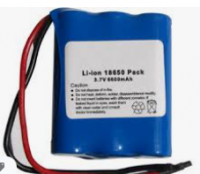
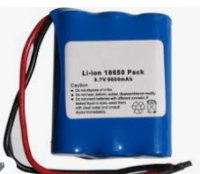
A related thing I often see a need for is something like a concave hull
that works like shrinkwrap. For example when a battery is made from the
shrink wrapped cells one might think the outer shape is the convex hull of
the cylinders but actually it is concave at the top and bottom.

[image: image.png]

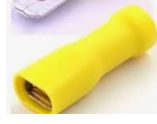
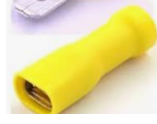
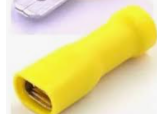
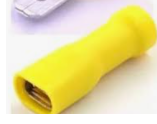
I have no idea how to model that. A similar requirement for modelling
insulated crimp terminals.

[image: image.png]

On Sat, 5 Feb 2022 at 11:47, Raymond West raywest@raywest.com wrote:

On 05/02/2022 10:32, nop head wrote:

I don't think the problem is well defined enough for there to be a new
operator. For a simple box the inside is easy to define but what if it
is a convoluted shape where the outside is concave or is open on one

face?

Consider just a round pipe with a hole cut out of it merged with a
panel. Should the hole in the panel be circular or a circle with a
flat on it where the pipe has its hole?

Exactly that! In theory, magic is possible...

If you have ever gone through the very basic programming training wrt
the difficulty of giving detailed instructions for making a pot of tea,
(or whatever the current instructional methods are) then you would
realise that what seems obvious to you, needs very detailed
explanation/definitions  to others, and others include computer
programs. Assumptions should not be made, there are always exceptions to
what you have assumed. Not a problem if exceptions are well defined, but
then it becomes the snake swallowing its tail. Klein bottle? How would
you design a rack for holding those using it's negative space, or even
generate its positive space - just saying...

Best wishes,

Ray


OpenSCAD mailing list
To unsubscribe send an email to discuss-leave@lists.openscad.org
A related thing I often see a need for is something like a concave hull that works like shrinkwrap. For example when a battery is made from the shrink wrapped cells one might think the outer shape is the convex hull of the cylinders but actually it is concave at the top and bottom. [image: image.png] I have no idea how to model that. A similar requirement for modelling insulated crimp terminals. [image: image.png] On Sat, 5 Feb 2022 at 11:47, Raymond West <raywest@raywest.com> wrote: > > On 05/02/2022 10:32, nop head wrote: > > I don't think the problem is well defined enough for there to be a new > > operator. For a simple box the inside is easy to define but what if it > > is a convoluted shape where the outside is concave or is open on one > face? > > > > Consider just a round pipe with a hole cut out of it merged with a > > panel. Should the hole in the panel be circular or a circle with a > > flat on it where the pipe has its hole? > > Exactly that! In theory, magic is possible... > > If you have ever gone through the very basic programming training wrt > the difficulty of giving detailed instructions for making a pot of tea, > (or whatever the current instructional methods are) then you would > realise that what seems obvious to you, needs very detailed > explanation/definitions to others, and others include computer > programs. Assumptions should not be made, there are always exceptions to > what you have assumed. Not a problem if exceptions are well defined, but > then it becomes the snake swallowing its tail. Klein bottle? How would > you design a rack for holding those using it's negative space, or even > generate its positive space - just saying... > > Best wishes, > > Ray > _______________________________________________ > OpenSCAD mailing list > To unsubscribe send an email to discuss-leave@lists.openscad.org >
AM
Adrian Mariano
Sat, Feb 5, 2022 1:44 PM

I'm not sure how this is related to the original question, but for the
battery, why can't you just start with three circles, round the shape with
two applications of offset() and then apply linear_extrude?

The crimp terminal seems more difficult to model.  It could be done by a
skin operation.

On Sat, Feb 5, 2022 at 7:18 AM nop head nop.head@gmail.com wrote:

A related thing I often see a need for is something like a concave hull
that works like shrinkwrap. For example when a battery is made from the
shrink wrapped cells one might think the outer shape is the convex hull of
the cylinders but actually it is concave at the top and bottom.

[image: image.png]

I have no idea how to model that. A similar requirement for modelling
insulated crimp terminals.

[image: image.png]

On Sat, 5 Feb 2022 at 11:47, Raymond West raywest@raywest.com wrote:

On 05/02/2022 10:32, nop head wrote:

I don't think the problem is well defined enough for there to be a new
operator. For a simple box the inside is easy to define but what if it
is a convoluted shape where the outside is concave or is open on one

face?

Consider just a round pipe with a hole cut out of it merged with a
panel. Should the hole in the panel be circular or a circle with a
flat on it where the pipe has its hole?

Exactly that! In theory, magic is possible...

If you have ever gone through the very basic programming training wrt
the difficulty of giving detailed instructions for making a pot of tea,
(or whatever the current instructional methods are) then you would
realise that what seems obvious to you, needs very detailed
explanation/definitions  to others, and others include computer
programs. Assumptions should not be made, there are always exceptions to
what you have assumed. Not a problem if exceptions are well defined, but
then it becomes the snake swallowing its tail. Klein bottle? How would
you design a rack for holding those using it's negative space, or even
generate its positive space - just saying...

Best wishes,

Ray


OpenSCAD mailing list
To unsubscribe send an email to discuss-leave@lists.openscad.org

OpenSCAD mailing list
To unsubscribe send an email to discuss-leave@lists.openscad.org

I'm not sure how this is related to the original question, but for the battery, why can't you just start with three circles, round the shape with two applications of offset() and then apply linear_extrude? The crimp terminal seems more difficult to model. It could be done by a skin operation. On Sat, Feb 5, 2022 at 7:18 AM nop head <nop.head@gmail.com> wrote: > A related thing I often see a need for is something like a concave hull > that works like shrinkwrap. For example when a battery is made from the > shrink wrapped cells one might think the outer shape is the convex hull of > the cylinders but actually it is concave at the top and bottom. > > [image: image.png] > > I have no idea how to model that. A similar requirement for modelling > insulated crimp terminals. > > [image: image.png] > > On Sat, 5 Feb 2022 at 11:47, Raymond West <raywest@raywest.com> wrote: > >> >> On 05/02/2022 10:32, nop head wrote: >> > I don't think the problem is well defined enough for there to be a new >> > operator. For a simple box the inside is easy to define but what if it >> > is a convoluted shape where the outside is concave or is open on one >> face? >> > >> > Consider just a round pipe with a hole cut out of it merged with a >> > panel. Should the hole in the panel be circular or a circle with a >> > flat on it where the pipe has its hole? >> >> Exactly that! In theory, magic is possible... >> >> If you have ever gone through the very basic programming training wrt >> the difficulty of giving detailed instructions for making a pot of tea, >> (or whatever the current instructional methods are) then you would >> realise that what seems obvious to you, needs very detailed >> explanation/definitions to others, and others include computer >> programs. Assumptions should not be made, there are always exceptions to >> what you have assumed. Not a problem if exceptions are well defined, but >> then it becomes the snake swallowing its tail. Klein bottle? How would >> you design a rack for holding those using it's negative space, or even >> generate its positive space - just saying... >> >> Best wishes, >> >> Ray >> _______________________________________________ >> OpenSCAD mailing list >> To unsubscribe send an email to discuss-leave@lists.openscad.org >> > _______________________________________________ > OpenSCAD mailing list > To unsubscribe send an email to discuss-leave@lists.openscad.org >
RW
Raymond West
Sat, Feb 5, 2022 2:50 PM

On 05/02/2022 12:17, nop head wrote:

I have no idea how to model that. A similar requirement for modelling
insulated crimp terminals.

In general, a 'shrink wrap vacuumed hull' would be useful, but in the
terminal specific case, other than looking nice, why would you need that
detail?* (I know the terminal is not shrink wrapped, perhaps just a
difficult shape to generate in openscad). But, with a significant bit of
effort, such terminals could be modelled. But, it borders on the 'need'
to be able to model physical characteristics of materials.

Ray

  • I guess maybe the length to determine where the wire could be bent,
    the area around the spade to decide on the spacing of connectors, maybe
    the waist in case you want a fixing clip or something there, but the
    smooth fillets?
On 05/02/2022 12:17, nop head wrote: > I have no idea how to model that. A similar requirement for modelling > insulated crimp terminals. In general, a 'shrink wrap vacuumed hull' would be useful, but in the terminal specific case, other than looking nice, why would you need that detail?* (I know the terminal is not shrink wrapped, perhaps just a difficult shape to generate in openscad). But, with a significant bit of effort, such terminals could be modelled. But, it borders on the 'need' to be able to model physical characteristics of materials. Ray * I guess maybe the length to determine where the wire could be bent, the area around the spade to decide on the spacing of connectors, maybe the waist in case you want a fixing clip or something there, but the smooth fillets?
NH
nop head
Sat, Feb 5, 2022 4:37 PM

It isn't a linear_extrude for the battery because in the middle of the
cells the shortest path is straight, giving a regular convex hull, but at
the top and bottom the tension is from two planes, so the minimum surface
energy is concave.

It is related to the original problem, because if you could have the
shrinkwrap hull of the object you could subtract that from the panel but I
don't know if the "shrinkwrap" hull or concave hull is possible to define
for all shapes.

Perhaps minimum surface hull is well defined and would solve both problems.

On Sat, 5 Feb 2022 at 14:50, Raymond West raywest@raywest.com wrote:

On 05/02/2022 12:17, nop head wrote:

I have no idea how to model that. A similar requirement for modelling
insulated crimp terminals.

In general, a 'shrink wrap vacuumed hull' would be useful, but in the
terminal specific case, other than looking nice, why would you need that
detail?* (I know the terminal is not shrink wrapped, perhaps just a
difficult shape to generate in openscad). But, with a significant bit of
effort, such terminals could be modelled. But, it borders on the 'need' to
be able to model physical characteristics of materials.

Ray

  • I guess maybe the length to determine where the wire could be bent, the
    area around the spade to decide on the spacing of connectors, maybe the
    waist in case you want a fixing clip or something there, but the smooth
    fillets?

OpenSCAD mailing list
To unsubscribe send an email to discuss-leave@lists.openscad.org
It isn't a linear_extrude for the battery because in the middle of the cells the shortest path is straight, giving a regular convex hull, but at the top and bottom the tension is from two planes, so the minimum surface energy is concave. It is related to the original problem, because if you could have the shrinkwrap hull of the object you could subtract that from the panel but I don't know if the "shrinkwrap" hull or concave hull is possible to define for all shapes. Perhaps minimum surface hull is well defined and would solve both problems. On Sat, 5 Feb 2022 at 14:50, Raymond West <raywest@raywest.com> wrote: > > On 05/02/2022 12:17, nop head wrote: > > I have no idea how to model that. A similar requirement for modelling > insulated crimp terminals. > > > In general, a 'shrink wrap vacuumed hull' would be useful, but in the > terminal specific case, other than looking nice, why would you need that > detail?* (I know the terminal is not shrink wrapped, perhaps just a > difficult shape to generate in openscad). But, with a significant bit of > effort, such terminals could be modelled. But, it borders on the 'need' to > be able to model physical characteristics of materials. > > Ray > > * I guess maybe the length to determine where the wire could be bent, the > area around the spade to decide on the spacing of connectors, maybe the > waist in case you want a fixing clip or something there, but the smooth > fillets? > _______________________________________________ > OpenSCAD mailing list > To unsubscribe send an email to discuss-leave@lists.openscad.org >