

discuss@lists.openscad.org

OpenSCAD general discussion Mailing-list

View all threads

Two annoyances

J
jon
Thu, Jul 2, 2015 2:13 PM

Peter:

Apologies.  I read your code more thoroughly, and it does do the
difference() that I require.  And it has the shapes consistently normal.
So, best of both worlds.

Jon

On 7/2/2015 9:24 AM, jon wrote:

Peter:

As much as I appreciate your approach, it turned out that I needed the
approach that subtracted an InnerHorn from the InnerHorn, in order to
clean up some other geometry (punching a hole through the
base/stand).  I suppose I can try to meld your normals and Michael's
cylinders...

Jon

On 7/2/2015 6:18 AM, Peter Falke wrote:

With my program the shapes are always placed normal to the path.
Just give me the math you used for the path.

2015-07-02 5:00 GMT+02:00 MichaelAtOz <oz.at.michael@gmail.com
mailto:oz.at.michael@gmail.com>:

 jon_bondy wrote

After I press F5, the Console says that it has completed the computation
in under a second, but it takes about 5 seconds for the

 rendering to

take place.  This is mildly annoying, but what is really

 annoying is

that for the next minute or so, the cursor alters between

 normal and

hourglass every 5 or 10 seconds.  It is as if it thinks I asked

 for an

adjustment in the rendered view, but I have not. Given how long the
rendering takes, this is very time consuming.

 Yeh, I had noted that too, very annoying. I suspect the refresh
 is under Qt
 control.
 You need to keep you mouse cursor out of the display window.
 That is the display driver latency when a high poly count AFAIK.

I got cute, and had the horns go up and then down. This is the

 result.

Any hints about how to orient the cylinders so that they are

 normal to

the path?

 No sorry, I would have to redo my high school maths, that makes
 my brain
 hurt...


 -----
 Unless specifically shown otherwise above, my contribution is in
 the Public Domain; To the extent possible under law, I have
 waived all copyright and related or neighbouring rights to this
 work. This work is published globally via the internet. :)
 Inclusion of works of previous authors is not included in the above.

 The TPP is no simple “trade agreement.”   Fight it!
 http://www.ourfairdeal.org/
 --
 View this message in context:
 http://forum.openscad.org/Two-annoyances-tp12935p12974.html
 Sent from the OpenSCAD mailing list archive at Nabble.com.

 _______________________________________________
 OpenSCAD mailing list
 Discuss@lists.openscad.org <mailto:Discuss@lists.openscad.org>
 http://lists.openscad.org/mailman/listinfo/discuss_lists.openscad.org

--
stempeldergeschichte@googlemail.com mailto:karsten@rohrbach.de

P.S. Falls meine E-Mail kürzer ausfällt als Dir angenehm ist:
Ich probiere gerade aus kurze Antworten statt gar keine Antworten zu
schreiben.
Wenn Du gerne mehr lesen möchtest, dann lass es mich bitte wissen.

P.S. In case my e-mail is shorter than you enjoy:
I am currently trying short replies instead of no replies at all.
Please let me know, if you like to read more.

Enjoy!


OpenSCAD mailing list
Discuss@lists.openscad.org
http://lists.openscad.org/mailman/listinfo/discuss_lists.openscad.org

No virus found in this message.
Checked by AVG - www.avg.com http://www.avg.com
Version: 2015.0.6037 / Virus Database: 4365/10143 - Release Date:
07/02/15


OpenSCAD mailing list
Discuss@lists.openscad.org
http://lists.openscad.org/mailman/listinfo/discuss_lists.openscad.org

No virus found in this message.
Checked by AVG - www.avg.com http://www.avg.com
Version: 2015.0.6037 / Virus Database: 4365/10145 - Release Date: 07/02/15

Peter: Apologies. I read your code more thoroughly, and it does do the difference() that I require. And it has the shapes consistently normal. So, best of both worlds. Jon On 7/2/2015 9:24 AM, jon wrote: > Peter: > > As much as I appreciate your approach, it turned out that I needed the > approach that subtracted an InnerHorn from the InnerHorn, in order to > clean up some other geometry (punching a hole through the > base/stand). I suppose I can try to meld your normals and Michael's > cylinders... > > Jon > > On 7/2/2015 6:18 AM, Peter Falke wrote: >> With my program the shapes are always placed normal to the path. >> Just give me the math you used for the path. >> >> >> 2015-07-02 5:00 GMT+02:00 MichaelAtOz <oz.at.michael@gmail.com >> <mailto:oz.at.michael@gmail.com>>: >> >> jon_bondy wrote >> > After I press F5, the Console says that it has completed the computation >> > in under a second, but it takes about 5 seconds for the >> rendering to >> > take place. This is mildly annoying, but what is really >> annoying is >> > that for the next minute or so, the cursor alters between >> normal and >> > hourglass every 5 or 10 seconds. It is as if it thinks I asked >> for an >> > adjustment in the rendered view, but I have not. Given how long the >> > rendering takes, this is very time consuming. >> >> Yeh, I had noted that too, very annoying. I suspect the refresh >> is under Qt >> control. >> You need to keep you mouse cursor out of the display window. >> That is the display driver latency when a high poly count AFAIK. >> >> >> > I got cute, and had the horns go up and then down. This is the >> result. >> > Any hints about how to orient the cylinders so that they are >> normal to >> > the path? >> >> No sorry, I would have to redo my high school maths, that makes >> my brain >> hurt... >> >> >> >> ----- >> Unless specifically shown otherwise above, my contribution is in >> the Public Domain; To the extent possible under law, I have >> waived all copyright and related or neighbouring rights to this >> work. This work is published globally via the internet. :) >> Inclusion of works of previous authors is not included in the above. >> >> The TPP is no simple “trade agreement.” Fight it! >> http://www.ourfairdeal.org/ >> -- >> View this message in context: >> http://forum.openscad.org/Two-annoyances-tp12935p12974.html >> Sent from the OpenSCAD mailing list archive at Nabble.com. >> >> _______________________________________________ >> OpenSCAD mailing list >> Discuss@lists.openscad.org <mailto:Discuss@lists.openscad.org> >> http://lists.openscad.org/mailman/listinfo/discuss_lists.openscad.org >> >> >> >> >> -- >> stempeldergeschichte@googlemail.com <mailto:karsten@rohrbach.de> >> >> P.S. Falls meine E-Mail kürzer ausfällt als Dir angenehm ist: >> Ich probiere gerade aus kurze Antworten statt gar keine Antworten zu >> schreiben. >> Wenn Du gerne mehr lesen möchtest, dann lass es mich bitte wissen. >> >> P.S. In case my e-mail is shorter than you enjoy: >> I am currently trying short replies instead of no replies at all. >> Please let me know, if you like to read more. >> >> Enjoy! >> >> >> _______________________________________________ >> OpenSCAD mailing list >> Discuss@lists.openscad.org >> http://lists.openscad.org/mailman/listinfo/discuss_lists.openscad.org >> >> >> No virus found in this message. >> Checked by AVG - www.avg.com <http://www.avg.com> >> Version: 2015.0.6037 / Virus Database: 4365/10143 - Release Date: >> 07/02/15 >> > > > > _______________________________________________ > OpenSCAD mailing list > Discuss@lists.openscad.org > http://lists.openscad.org/mailman/listinfo/discuss_lists.openscad.org > > > No virus found in this message. > Checked by AVG - www.avg.com <http://www.avg.com> > Version: 2015.0.6037 / Virus Database: 4365/10145 - Release Date: 07/02/15 >
J
jon
Thu, Jul 2, 2015 10:11 PM

I have been keeping my cursor out of the display window, but even so,
the thing redraws perhaps 5 times before anything useful appears.  So I
sit there for 2-3 minutes waiting for the display to appear.  If I click
on the icon to display the full object, that takes another 2-3 minutes
of repeated displays.

Something is really wrong.  I mean, other than the fact that my
particular model has a lot of triangles.

Jon

On 7/1/2015 11:00 PM, MichaelAtOz wrote:

jon_bondy wrote

After I press F5, the Console says that it has completed the computation
in under a second, but it takes about 5 seconds for the rendering to
take place.  This is mildly annoying, but what is really annoying is
that for the next minute or so, the cursor alters between normal and
hourglass every 5 or 10 seconds.  It is as if it thinks I asked for an
adjustment in the rendered view, but I have not.  Given how long the
rendering takes, this is very time consuming.

Yeh, I had noted that too, very annoying. I suspect the refresh is under Qt
control.
You need to keep you mouse cursor out of the display window.
That is the display driver latency when a high poly count AFAIK.

I got cute, and had the horns go up and then down.  This is the result.
Any hints about how to orient the cylinders so that they are normal to
the path?

No sorry, I would have to redo my high school maths, that makes my brain
hurt...


Unless specifically shown otherwise above, my contribution is in the Public Domain; To the extent possible under law, I have waived all copyright and related or neighbouring rights to this work. This work is published globally via the internet. :) Inclusion of works of previous authors is not included in the above.

The TPP is no simple “trade agreement.”  Fight it! http://www.ourfairdeal.org/

View this message in context: http://forum.openscad.org/Two-annoyances-tp12935p12974.html
Sent from the OpenSCAD mailing list archive at Nabble.com.


OpenSCAD mailing list
Discuss@lists.openscad.org
http://lists.openscad.org/mailman/listinfo/discuss_lists.openscad.org


No virus found in this message.
Checked by AVG - www.avg.com
Version: 2015.0.6037 / Virus Database: 4365/10140 - Release Date: 07/01/15

I have been keeping my cursor out of the display window, but even so, the thing redraws perhaps 5 times before anything useful appears. So I sit there for 2-3 minutes waiting for the display to appear. If I click on the icon to display the full object, that takes another 2-3 minutes of repeated displays. Something is really wrong. I mean, other than the fact that my particular model has a lot of triangles. Jon On 7/1/2015 11:00 PM, MichaelAtOz wrote: > jon_bondy wrote >> After I press F5, the Console says that it has completed the computation >> in under a second, but it takes about 5 seconds for the rendering to >> take place. This is mildly annoying, but what is really annoying is >> that for the next minute or so, the cursor alters between normal and >> hourglass every 5 or 10 seconds. It is as if it thinks I asked for an >> adjustment in the rendered view, but I have not. Given how long the >> rendering takes, this is very time consuming. > Yeh, I had noted that too, very annoying. I suspect the refresh is under Qt > control. > You need to keep you mouse cursor out of the display window. > That is the display driver latency when a high poly count AFAIK. > > >> I got cute, and had the horns go up and then down. This is the result. >> Any hints about how to orient the cylinders so that they are normal to >> the path? > No sorry, I would have to redo my high school maths, that makes my brain > hurt... > > > > ----- > Unless specifically shown otherwise above, my contribution is in the Public Domain; To the extent possible under law, I have waived all copyright and related or neighbouring rights to this work. This work is published globally via the internet. :) Inclusion of works of previous authors is not included in the above. > > The TPP is no simple “trade agreement.” Fight it! http://www.ourfairdeal.org/ > -- > View this message in context: http://forum.openscad.org/Two-annoyances-tp12935p12974.html > Sent from the OpenSCAD mailing list archive at Nabble.com. > > _______________________________________________ > OpenSCAD mailing list > Discuss@lists.openscad.org > http://lists.openscad.org/mailman/listinfo/discuss_lists.openscad.org > > > ----- > No virus found in this message. > Checked by AVG - www.avg.com > Version: 2015.0.6037 / Virus Database: 4365/10140 - Release Date: 07/01/15
PF
Peter Falke
Thu, Jul 2, 2015 11:10 PM

Why do you want so many triangles, anyway?
What is the resolution you need in the end?


I dont have your code, but it looks to me, that you just union a lot of
cylinders together. That always be slow.
If you would use a chain hull algorithm, you can use much less cylinders
and still get a smooth surface.
You just cant brute force everything in OpenScad.
You also may have a lock at the sweep algorithm, that is super fast for
these things.
https://github.com/openscad/list-comprehension-demos

Share your code and we can give you some pointers.

2015-07-03 0:11 GMT+02:00 jon jon@jonbondy.com:

I have been keeping my cursor out of the display window, but even so, the
thing redraws perhaps 5 times before anything useful appears.  So I sit
there for 2-3 minutes waiting for the display to appear.  If I click on the
icon to display the full object, that takes another 2-3 minutes of repeated
displays.

Something is really wrong.  I mean, other than the fact that my particular
model has a lot of triangles.

Jon

On 7/1/2015 11:00 PM, MichaelAtOz wrote:

jon_bondy wrote

After I press F5, the Console says that it has completed the computation
in under a second, but it takes about 5 seconds for the rendering to
take place.  This is mildly annoying, but what is really annoying is
that for the next minute or so, the cursor alters between normal and
hourglass every 5 or 10 seconds.  It is as if it thinks I asked for an
adjustment in the rendered view, but I have not.  Given how long the
rendering takes, this is very time consuming.

Yeh, I had noted that too, very annoying. I suspect the refresh is under
Qt
control.
You need to keep you mouse cursor out of the display window.
That is the display driver latency when a high poly count AFAIK.

I got cute, and had the horns go up and then down.  This is the result.

Any hints about how to orient the cylinders so that they are normal to
the path?

No sorry, I would have to redo my high school maths, that makes my brain
hurt...


Unless specifically shown otherwise above, my contribution is in the
Public Domain; To the extent possible under law, I have waived all
copyright and related or neighbouring rights to this work. This work is
published globally via the internet. :) Inclusion of works of previous
authors is not included in the above.

The TPP is no simple “trade agreement.”  Fight it!
http://www.ourfairdeal.org/

View this message in context:
http://forum.openscad.org/Two-annoyances-tp12935p12974.html
Sent from the OpenSCAD mailing list archive at Nabble.com.


OpenSCAD mailing list
Discuss@lists.openscad.org
http://lists.openscad.org/mailman/listinfo/discuss_lists.openscad.org


No virus found in this message.
Checked by AVG - www.avg.com
Version: 2015.0.6037 / Virus Database: 4365/10140 - Release Date: 07/01/15

--
stempeldergeschichte@googlemail.com karsten@rohrbach.de

P.S. Falls meine E-Mail kürzer ausfällt als Dir angenehm ist:
Ich probiere gerade aus kurze Antworten statt gar keine Antworten zu
schreiben.
Wenn Du gerne mehr lesen möchtest, dann lass es mich bitte wissen.

P.S. In case my e-mail is shorter than you enjoy:
I am currently trying short replies instead of no replies at all.
Please let me know, if you like to read more.

Enjoy!
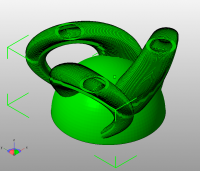
Why do you want so many triangles, anyway? What is the resolution you need in the end? ​ I dont have your code, but it looks to me, that you just union a lot of cylinders together. That always be slow. If you would use a chain hull algorithm, you can use much less cylinders and still get a smooth surface. You just cant brute force everything in OpenScad. You also may have a lock at the sweep algorithm, that is super fast for these things. https://github.com/openscad/list-comprehension-demos Share your code and we can give you some pointers. ​ 2015-07-03 0:11 GMT+02:00 jon <jon@jonbondy.com>: > I have been keeping my cursor out of the display window, but even so, the > thing redraws perhaps 5 times before anything useful appears. So I sit > there for 2-3 minutes waiting for the display to appear. If I click on the > icon to display the full object, that takes another 2-3 minutes of repeated > displays. > > Something is really wrong. I mean, other than the fact that my particular > model has a lot of triangles. > > Jon > > > On 7/1/2015 11:00 PM, MichaelAtOz wrote: > >> jon_bondy wrote >> >>> After I press F5, the Console says that it has completed the computation >>> in under a second, but it takes about 5 seconds for the rendering to >>> take place. This is mildly annoying, but what is really annoying is >>> that for the next minute or so, the cursor alters between normal and >>> hourglass every 5 or 10 seconds. It is as if it thinks I asked for an >>> adjustment in the rendered view, but I have not. Given how long the >>> rendering takes, this is very time consuming. >>> >> Yeh, I had noted that too, very annoying. I suspect the refresh is under >> Qt >> control. >> You need to keep you mouse cursor out of the display window. >> That is the display driver latency when a high poly count AFAIK. >> >> >> I got cute, and had the horns go up and then down. This is the result. >>> Any hints about how to orient the cylinders so that they are normal to >>> the path? >>> >> No sorry, I would have to redo my high school maths, that makes my brain >> hurt... >> >> >> >> ----- >> Unless specifically shown otherwise above, my contribution is in the >> Public Domain; To the extent possible under law, I have waived all >> copyright and related or neighbouring rights to this work. This work is >> published globally via the internet. :) Inclusion of works of previous >> authors is not included in the above. >> >> The TPP is no simple “trade agreement.” Fight it! >> http://www.ourfairdeal.org/ >> -- >> View this message in context: >> http://forum.openscad.org/Two-annoyances-tp12935p12974.html >> Sent from the OpenSCAD mailing list archive at Nabble.com. >> >> _______________________________________________ >> OpenSCAD mailing list >> Discuss@lists.openscad.org >> http://lists.openscad.org/mailman/listinfo/discuss_lists.openscad.org >> >> >> ----- >> No virus found in this message. >> Checked by AVG - www.avg.com >> Version: 2015.0.6037 / Virus Database: 4365/10140 - Release Date: 07/01/15 >> > > > _______________________________________________ > OpenSCAD mailing list > Discuss@lists.openscad.org > http://lists.openscad.org/mailman/listinfo/discuss_lists.openscad.org > -- stempeldergeschichte@googlemail.com <karsten@rohrbach.de> P.S. Falls meine E-Mail kürzer ausfällt als Dir angenehm ist: Ich probiere gerade aus kurze Antworten statt gar keine Antworten zu schreiben. Wenn Du gerne mehr lesen möchtest, dann lass es mich bitte wissen. P.S. In case my e-mail is shorter than you enjoy: I am currently trying short replies instead of no replies at all. Please let me know, if you like to read more. Enjoy!
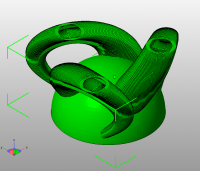
J
jon
Sat, Jul 4, 2015 7:17 PM

I think that one reason I avoid Sweep is because there is no
documentation that I can find, and the code has no comments at all. It
may be obvious to some of you, but not to me.  It is pure majick.

For example, in sweep-path, a function f() is defined, which appears to
define a path through 3D space.  Fine.  Why does the shape rotate as it
is swept out?  What is controlling that?

I guess that the shape() is 2D (because it only has pairs of
coordinates) but it is not in any format that I know about (no
triangles, no faces).  How does it work?

Does it really have to be so obscure?

Jon

On 7/2/2015 7:10 PM, Peter Falke wrote:

Why do you want so many triangles, anyway?
What is the resolution you need in the end?


I dont have your code, but it looks to me, that you just union a lot
of cylinders together. That always be slow.
If you would use a chain hull algorithm, you can use much less
cylinders and still get a smooth surface.
You just cant brute force everything in OpenScad.
You also may have a lock at the sweep algorithm, that is super fast
for these things.
https://github.com/openscad/list-comprehension-demos

Share your code and we can give you some pointers.

I think that one reason I avoid Sweep is because there is no documentation that I can find, and the code has no comments at all. It may be obvious to some of you, but not to me. It is pure majick. For example, in sweep-path, a function f() is defined, which appears to define a path through 3D space. Fine. Why does the shape rotate as it is swept out? What is controlling that? I guess that the shape() is 2D (because it only has pairs of coordinates) but it is not in any format that I know about (no triangles, no faces). How does it work? Does it really have to be so obscure? Jon On 7/2/2015 7:10 PM, Peter Falke wrote: > Why do you want so many triangles, anyway? > What is the resolution you need in the end? > > > ​ > I dont have your code, but it looks to me, that you just union a lot > of cylinders together. That always be slow. > If you would use a chain hull algorithm, you can use much less > cylinders and still get a smooth surface. > You just cant brute force everything in OpenScad. > You also may have a lock at the sweep algorithm, that is super fast > for these things. > https://github.com/openscad/list-comprehension-demos > > Share your code and we can give you some pointers.
J
jon
Wed, Jul 8, 2015 12:27 PM

Crickets?  Really?

On 7/4/2015 3:17 PM, jon wrote:

I think that one reason I avoid Sweep is because there is no
documentation that I can find, and the code has no comments at all.
It may be obvious to some of you, but not to me.  It is pure majick.

For example, in sweep-path, a function f() is defined, which appears
to define a path through 3D space.  Fine.  Why does the shape rotate
as it is swept out?  What is controlling that?

I guess that the shape() is 2D (because it only has pairs of
coordinates) but it is not in any format that I know about (no
triangles, no faces).  How does it work?

Does it really have to be so obscure?

Jon

On 7/2/2015 7:10 PM, Peter Falke wrote:

Why do you want so many triangles, anyway?
What is the resolution you need in the end?


I dont have your code, but it looks to me, that you just union a lot
of cylinders together. That always be slow.
If you would use a chain hull algorithm, you can use much less
cylinders and still get a smooth surface.
You just cant brute force everything in OpenScad.
You also may have a lock at the sweep algorithm, that is super fast
for these things.
https://github.com/openscad/list-comprehension-demos

Share your code and we can give you some pointers.


OpenSCAD mailing list
Discuss@lists.openscad.org
http://lists.openscad.org/mailman/listinfo/discuss_lists.openscad.org

No virus found in this message.
Checked by AVG - www.avg.com http://www.avg.com
Version: 2015.0.6037 / Virus Database: 4365/10159 - Release Date: 07/04/15
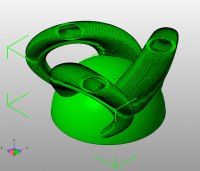

Crickets? Really? On 7/4/2015 3:17 PM, jon wrote: > I think that one reason I avoid Sweep is because there is no > documentation that I can find, and the code has no comments at all. > It may be obvious to some of you, but not to me. It is pure majick. > > For example, in sweep-path, a function f() is defined, which appears > to define a path through 3D space. Fine. Why does the shape rotate > as it is swept out? What is controlling that? > > I guess that the shape() is 2D (because it only has pairs of > coordinates) but it is not in any format that I know about (no > triangles, no faces). How does it work? > > Does it really have to be so obscure? > > Jon > > On 7/2/2015 7:10 PM, Peter Falke wrote: >> Why do you want so many triangles, anyway? >> What is the resolution you need in the end? >> >> >> ​ >> I dont have your code, but it looks to me, that you just union a lot >> of cylinders together. That always be slow. >> If you would use a chain hull algorithm, you can use much less >> cylinders and still get a smooth surface. >> You just cant brute force everything in OpenScad. >> You also may have a lock at the sweep algorithm, that is super fast >> for these things. >> https://github.com/openscad/list-comprehension-demos >> >> Share your code and we can give you some pointers. > > > > _______________________________________________ > OpenSCAD mailing list > Discuss@lists.openscad.org > http://lists.openscad.org/mailman/listinfo/discuss_lists.openscad.org > > > No virus found in this message. > Checked by AVG - www.avg.com <http://www.avg.com> > Version: 2015.0.6037 / Virus Database: 4365/10159 - Release Date: 07/04/15 >
M
MichaelAtOz
Wed, Jul 8, 2015 10:02 PM

there is no documentation

It is a user space function, not part of OpenSCAD. Hopefully the author may
be listening...

It may be obvious to some of you

No, generally over my head, I have to look at it carefully.

in sweep-path, a function f() is defined, which appears to define a path
through 3D space.
Why does the shape rotate as it is swept out?

Got me. I suspect tangent_path() is involved.

I guess that the shape() is 2D (because it only has pairs of coordinates)
but it is not in any format that I know about (no triangles, no faces).
How does it work?

Yes it is a 2D shape. Note line 36 shape3d = to_3d(shape); in sweep.scad -
I have not looked at to_3D yet.

But note polygon just takes a list of points, path is optional if the points
are in order.

Does it really have to be so obscure?

I suppose it could use some comments, but it is user content. So enjoy what
you have ??


Unless specifically shown otherwise above, my contribution is in the Public Domain; To the extent possible under law, I have waived all copyright and related or neighbouring rights to this work. This work is published globally via the internet. :) Inclusion of works of previous authors is not included in the above.

The TPP is no simple “trade agreement.”  Fight it! http://www.ourfairdeal.org/

View this message in context: http://forum.openscad.org/Two-annoyances-tp12935p13100.html
Sent from the OpenSCAD mailing list archive at Nabble.com.

> there is no documentation It is a user space function, not part of OpenSCAD. Hopefully the author may be listening... > It may be obvious to some of you No, generally over my head, I have to look at it carefully. > in sweep-path, a function f() is defined, which appears to define a path > through 3D space. > Why does the shape rotate as it is swept out? Got me. I suspect tangent_path() is involved. > I guess that the shape() is 2D (because it only has pairs of coordinates) > but it is not in any format that I know about (no triangles, no faces). > How does it work? Yes it is a 2D shape. Note line 36 `shape3d = to_3d(shape);` in sweep.scad - I have not looked at to_3D yet. But note polygon just takes a list of points, path is optional if the points are in order. > Does it really have to be so obscure? I suppose it could use some comments, but it is user content. So enjoy what you have ?? ----- Unless specifically shown otherwise above, my contribution is in the Public Domain; To the extent possible under law, I have waived all copyright and related or neighbouring rights to this work. This work is published globally via the internet. :) Inclusion of works of previous authors is not included in the above. The TPP is no simple “trade agreement.” Fight it! http://www.ourfairdeal.org/ -- View this message in context: http://forum.openscad.org/Two-annoyances-tp12935p13100.html Sent from the OpenSCAD mailing list archive at Nabble.com.
J
jon
Wed, Jul 8, 2015 11:34 PM

Michael:

Thanks for trying.  Glad I'm not the only one who does not understand
everything!

Jon

On 7/8/2015 6:02 PM, MichaelAtOz wrote:

there is no documentation

It is a user space function, not part of OpenSCAD. Hopefully the author may
be listening...

It may be obvious to some of you

No, generally over my head, I have to look at it carefully.

in sweep-path, a function f() is defined, which appears to define a path
through 3D space.
Why does the shape rotate as it is swept out?

Got me. I suspect tangent_path() is involved.

I guess that the shape() is 2D (because it only has pairs of coordinates)
but it is not in any format that I know about (no triangles, no faces).
How does it work?

Yes it is a 2D shape. Note line 36 shape3d = to_3d(shape); in sweep.scad -
I have not looked at to_3D yet.

But note polygon just takes a list of points, path is optional if the points
are in order.

Does it really have to be so obscure?

I suppose it could use some comments, but it is user content. So enjoy what
you have ??


Unless specifically shown otherwise above, my contribution is in the Public Domain; To the extent possible under law, I have waived all copyright and related or neighbouring rights to this work. This work is published globally via the internet. :) Inclusion of works of previous authors is not included in the above.

The TPP is no simple “trade agreement.”  Fight it! http://www.ourfairdeal.org/

View this message in context: http://forum.openscad.org/Two-annoyances-tp12935p13100.html
Sent from the OpenSCAD mailing list archive at Nabble.com.


OpenSCAD mailing list
Discuss@lists.openscad.org
http://lists.openscad.org/mailman/listinfo/discuss_lists.openscad.org


No virus found in this message.
Checked by AVG - www.avg.com
Version: 2015.0.6081 / Virus Database: 4392/10188 - Release Date: 07/08/15

Michael: Thanks for trying. Glad I'm not the only one who does not understand everything! Jon On 7/8/2015 6:02 PM, MichaelAtOz wrote: >> there is no documentation > It is a user space function, not part of OpenSCAD. Hopefully the author may > be listening... > >> It may be obvious to some of you > No, generally over my head, I have to look at it carefully. > >> in sweep-path, a function f() is defined, which appears to define a path >> through 3D space. >> Why does the shape rotate as it is swept out? > Got me. I suspect tangent_path() is involved. > >> I guess that the shape() is 2D (because it only has pairs of coordinates) >> but it is not in any format that I know about (no triangles, no faces). >> How does it work? > Yes it is a 2D shape. Note line 36 `shape3d = to_3d(shape);` in sweep.scad - > I have not looked at to_3D yet. > > But note polygon just takes a list of points, path is optional if the points > are in order. > >> Does it really have to be so obscure? > I suppose it could use some comments, but it is user content. So enjoy what > you have ?? > > > > ----- > Unless specifically shown otherwise above, my contribution is in the Public Domain; To the extent possible under law, I have waived all copyright and related or neighbouring rights to this work. This work is published globally via the internet. :) Inclusion of works of previous authors is not included in the above. > > The TPP is no simple “trade agreement.” Fight it! http://www.ourfairdeal.org/ > -- > View this message in context: http://forum.openscad.org/Two-annoyances-tp12935p13100.html > Sent from the OpenSCAD mailing list archive at Nabble.com. > > _______________________________________________ > OpenSCAD mailing list > Discuss@lists.openscad.org > http://lists.openscad.org/mailman/listinfo/discuss_lists.openscad.org > > > ----- > No virus found in this message. > Checked by AVG - www.avg.com > Version: 2015.0.6081 / Virus Database: 4392/10188 - Release Date: 07/08/15
MK
Marius Kintel
Wed, Aug 12, 2015 6:51 PM

On Jul 4, 2015, at 21:17 PM, jon jon@jonbondy.com wrote:

I think that one reason I avoid Sweep is because there is no documentation that I can find, and the code has no comments at all.  It may be obvious to some of you, but not to me.  It is pure majick.

sweep() is merely an experiment/demo to help figure out how a built-in sweep function should look like. It was hacked together mostly by Oskar Linde, and packaged into the demo repository by me.
It’s made public so that people can play with it and people who are interested in digging deep can do so.

-Marius

On Jul 4, 2015, at 21:17 PM, jon <jon@jonbondy.com> wrote: > I think that one reason I avoid Sweep is because there is no documentation that I can find, and the code has no comments at all. It may be obvious to some of you, but not to me. It is pure majick. > sweep() is merely an experiment/demo to help figure out how a built-in sweep function should look like. It was hacked together mostly by Oskar Linde, and packaged into the demo repository by me. It’s made public so that people can play with it and people who are interested in digging deep can do so. -Marius